
- Taxis are an affordable way to get around Bangkok, but public transportation like the BTS and MRT can skip any bad traffic
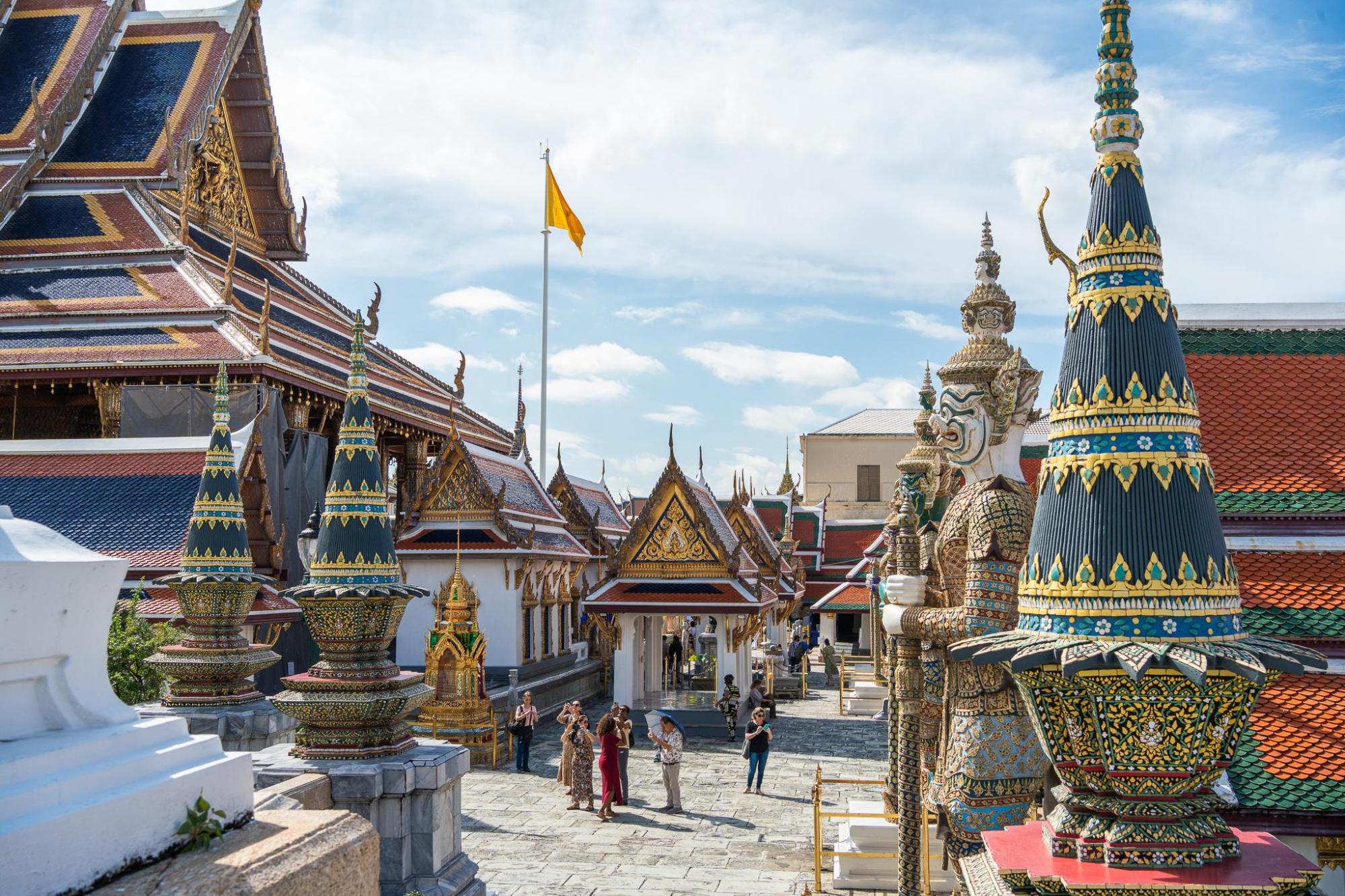
- You’ll need to cover your knees and shoulders to enter the Grand Palace
- If it’s your first time eating street food, look for vendors that are popular with locals and try to avoid uncooked or raw ingredients
More than just a stopover, Thailand's capital is bursting with heritage and culture, from ornate temples to glittering shopping malls and world-class dining everywhere you look. With so many things to do in Bangkok, it's easy to spend days exploring the city and still have more to discover.
Generally visiting Bangkok is quite easy, with lots of transportation options, popular tourist districts, and modern amenities. But there are some important things to know about Bangkok before you visit to make your trip even more enjoyable.
When to visit Bangkok
Rather than the main four seasons that many parts of the world follow, Bangkok tends to have three distinct seasons determined by the heat and the rain.
Dry season: Peak
For great weather, the best time to visit Bangkok is the dry season from November to February. There's very little rain and the temperature is not at its highest, making these months pleasant for most types of activities.
The downside is that it's the busiest time of the year, especially as it coincides with holiday periods in other parts of the world. Prices tend to go up, and there can be crowds at the main sights and visitor areas.
Hot season: Off-peak
The hot season in Bangkok, from March to May, can get really hot, with many days above 104°F. While that discourages many travelers, you'll find it's less crowded and there's great availability for accommodation and tours. It can be a cheaper time to visit Bangkok and may be convenient if you were planning on a lot of indoor activities anyway.
Wet season: Shoulder
As the name suggests, the wet season means rain in Bangkok, but you’ll mostly experience afternoon storms in the early months from June to July. Because of the summer vacation in the northern hemisphere, the city can still get quite a lot of travelers, so it can be a fun time to be in the city.
However, September and October are the wettest time of the year and there are very few visitors.
How long to stay in Bangkok
From the historic sights to the dazzling megamalls, the Thai capital's different districts offer endless opportunities to explore the local culture and food scene. You could spend weeks here and still be finding new things. There's a reason so many visitors keep returning to Bangkok.
For first-time visitors to Bangkok, around three days is the shortest trip that gives you a chance to see the city's highlights. If possible, stay for a week to discover some of the lesser-visited neighborhoods and perhaps do a day trip to somewhere like Ayutthaya.
How to get around Bangkok
Bangkok is a big, bustling city. The main ways to get around are public transportation—which avoids any traffic—or taxis, which are more comfortable.
Public transportation: Trains and buses
Cheap and efficient, Bangkok's public transportation system is a good way to get around the city. The most popular parts of the network are the two rail systems, the BTS Skytrain and the MRT subway.
The two BTS lines are above ground, mostly in the city center and have relatively short distances between stops, making them convenient for hotspots like Silom and Sukhumvit. Much of the MRT lines are underground and cover more suburban areas further out. However, the convenient Blue Line connects Silom and Sukhumvit to the tourist area around the Grand Palace.
There are also buses in Bangkok, but these aren't commonly used by visitors because they generally go to more residential areas and can be harder to navigate for non-Thai speakers.
You can use cash to buy single tickets for all of Bangkok's public transportation. The MRT also allows credit cards to be tapped, while the BTS has its own rechargeable card called a Rabbit.
Public transportation: Boats
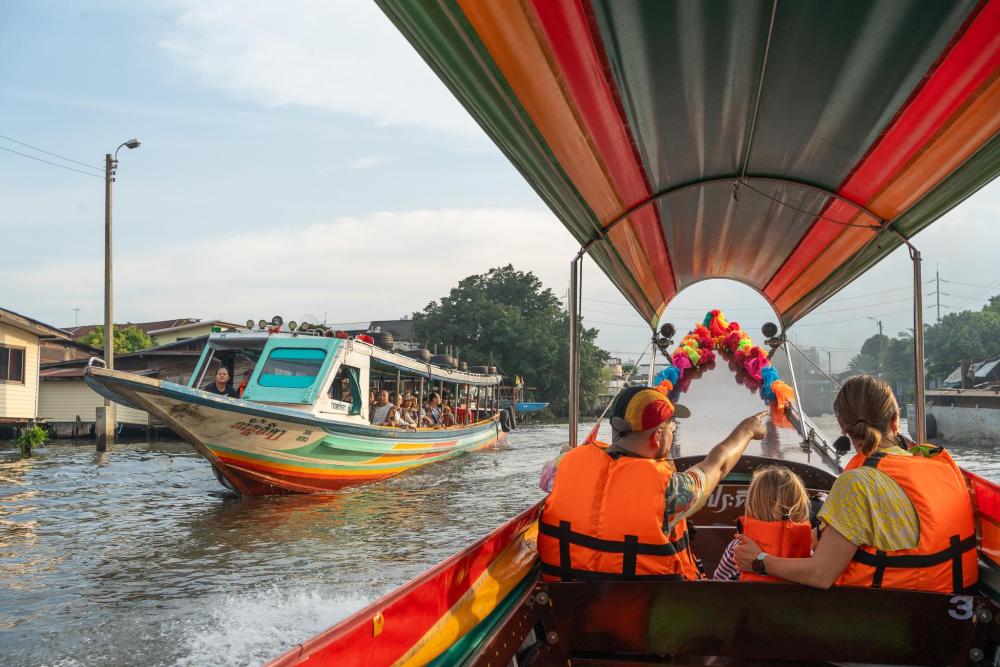
Bangkok also has public transportation along the city's waterways, which can be both efficient and a scenic experience.
On Bangkok's main Chao Phraya River, commuter boats can be identified by their orange, yellow, or green flags – the orange flag boat is the most convenient for tourist areas. There's also the Chao Phraya Express Boat, a more comfortable and faster boat aimed mainly at foreign visitors with a much higher ticket price.
And there are the canal boats that start near Khao San Road and go east along a narrow waterway. It's a cheap local experience that skips all the traffic, but be prepared to hold up a tarpaulin to keep the water off.
Taxis: Car and motorbikes
Compared to many other large global cities, taxis are quite affordable in Bangkok, so they're a common way to get around the city. They can be more efficient and comfortable than public transportation, although they might get caught in Bangkok's notoriously busy peak-hour traffic.
There are lots of car taxis that can be hailed on the street or from a taxi rank, but Bangkok also has motorbike taxis that you'll find waiting at assigned spots on the street – look for the drivers wearing orange vests. The motorbike taxis will be a bit cheaper than the cars and have the advantage of being able to cut through traffic jams.
Tuk tuks
One final way to get around Bangkok that's worth mentioning are the city's iconic tuk tuks. These three-wheeled motorized vehicles can fit two or three people in the back and are open-air on the sides.
While tuk tuks were once a more common way to get around Bangkok, many are now focused on travelers who want a fun experience. They don't have meters, so you'll need to negotiate a price in advance. Avoid drivers waiting at tourist areas or hotels because they're more likely to charge more or take you to stores where they get commission.
Where to stay during your trip to Bangkok
For most visitors, the best place to stay in Bangkok will be in the center of the city. But, even then, there are a few good districts to choose from, each with their own advantages.
- Sukhumvit: A bustling area full of restaurants, hotels, and bars, it's close to some large shopping malls and has convenient transportation, making it popular for people visiting Bangkok for the first time.
- Silom: Although there are quite a few office buildings, the neighborhood comes alive in the evening with street markets, nightclubs, and busy restaurants.
- Riverside: You'll find some of Bangkok's best five-star hotels along the river, which is a more relaxing part of the city even though it's close to many of the main attractions.
Essential things to know about Bangkok
To make the most of your time visiting the city, let's have a look at some useful pieces of Bangkok travel advice.
Shopping
An ubiquitous part of life in Bangkok are the city's convenience stores, which you'll find in every neighborhood. Most of them are open 24 hours a day and, in the busiest parts of Bangkok, you might even find them just feet apart. The air-conditioning can be a nice break from a hot day, and they're also useful for things like toiletries and phone cards.
When it comes to shopping in Thailand, there will be times you'll be able to bargain. Places like grocery stores, malls, and restaurants will have fixed prices that are displayed, but some bargaining is acceptable at street markets. Smaller independent stores may offer discounts if you buy multiple items.
Beware of tourist scams
Bangkok is generally a very friendly city but there are a few common scams that take advantage of that reputation. Here are some situations to avoid:
- Tuk tuk drivers or people claiming to be guides might tell you a major attraction like the Grand Palace is closed and offer to take you on an alternative tour, which just ends up at expensive stores where they get a commission.
- Taxi drivers waiting outside hotels or tourist areas will often try to quote a fixed fare much higher than it should be, so insist they use the meter.
- If you're renting something like a scooter, take photos of its condition or you might be charged large amounts for damage you didn’t do.
Have cash on hand
Although major stores, restaurants, and convenience stores will take credit cards, Bangkok is still largely a cash-based city. You'll need to always have Thai baht with you for things like taxis and street food – small change is better.
There are a lot of ATMs in Bangkok where you can withdraw cash, but they have higher fees than in most countries. To save money, you may want to limit the number of times you need an ATM by withdrawing larger amounts.
Dress appropriately
Thai people tend to dress quite modestly. While locals are used to travelers wearing shorts and tank tops, it's respectful to cover your shoulders and knees if you're doing anything more formal.
There's a strict dress code at the Grand Palace and Wat Pho. You'll need to rent clothes if your knees or shoulders are showing. At most temples, you'll be expected to take off your shoes before entering.
Make sure to pack light clothing for the hot and humid weather, a rain jacket in the wet season, and sun protection.
Stay safe
Bangkok is generally safe but, like most large cities, you should take some precautions. Keep your wallet or purse securely on your body, and put your bag strap across your body. When going across the road, use traffic lights or official crossings and always watch out for motorbikes.
By law, you need to carry identification with you at all times. Rather than use your passport, you can carry a photocopy instead.
Street food
A highlight of visiting Bangkok is trying the city's street food and there are ways to do that safely. First, try to choose stalls that are popular with the locals because that's a good sign the produce will be fresh.
When choosing what to order, prioritize cooked meals over raw dishes because the heat will make the food safer to eat. If you have a sensitive stomach, start with ingredients you'd normally have at home.
Most Thai dishes will be cooked quite quickly and served to small tables and chairs near the vendor. It's respectful not to linger at the tables for too long if other people are waiting.
Drinking water
The tap water in Bangkok isn't safe to drink without boiling, so you should only use bottled or filtered water, even for brushing your teeth if you have a sensitive stomach.
In general, ice cubes served at bars and restaurants are safe because factory-made ice is very common in Bangkok. If you're concerned, either ask for no ice or look for indications that it's been commercially produced – such as a tubular shape with a hole in the middle.
Local customs and rules
The most common way to greet someone in Bangkok is by saying hello (men say sawasdee khrap and women say sawasdee kha) and possibly by also putting your hands together and bowing your head slightly.
In Thai culture, shouting or getting angry is considered to be inappropriate behavior so, even if you're having a disagreement, try to stay calm. It's also considered rude to touch somebody's head or to point at something with a single finger – use your whole palm or thumb instead.
It's important to follow the local rules in Bangkok, such as Thailand's lèse-majesté law, which has severe punishments for insulting the royal family, including defacing any image of the king's face.
Songkran
The Thai New Year, called Songkran, is celebrated on April 13, with the festivities often extending for multiple days. The national holiday means not all businesses will be operating, and you might find some transportation is fully booked by locals leaving the capital for their hometowns.
But Songkran is also celebrated with a massive country-wide water fight, and there will be lots of people on the street with buckets and water pistols! It's likely you'll get wet, so dress appropriately and waterproof your belongings. Most importantly, remember it's a fun cultural event and you'll be expected to get into the spirit.

Top things to do when visiting Bangkok
From the culture to the nightlife, there's more than enough to fill a seven-day itinerary in Bangkok. But if you're just stopping through for a couple of days, here are some of the top attractions:
- Grand Palace and Wat Pho: See the elaborate-decorations of the official home of Thailand's royal family and the neighboring Wat Pho temple with an enormous reclining Buddha.
- Chinatown: One of Bangkok's most vibrant neighborhoods, discover temples and markets before trying some of the street food specialties.
- Chao Phraya River cruise: Take a relaxing trip along the city's main waterway to see key sights like Wat Arun temple from a different perspective.

Bangkok travel tips: Hidden gems
As well as the main things to see in Bangkok, there are some lesser-known sights that will show you a different side of the city.
- Golden Mount: Climb the 300 steps to this temple, also known as Wat Saket, ringing the bells along the path before reaching the summit for wonderful views across Bangkok.
- Jim Thompson House: The teakwood home of an American who revitalized Thailand's silk industry in the 1950s has been turned into a museum with his Asian art collection.
- Charoenkrung: A trendy district where old riverside warehouses have been turned into art galleries, craft stores, and innovative restaurants and bars.
A city of smiles
One of the wonderful things about Bangkok is that everything feels like an adventure, whether it's catching a commuter boat down the river or walking past the rows of street food vendors.
If you have time, join a tour with a local guide to see some of the Thai culture beyond the main tourist areas. Or even if you're only visiting for a short time, wander around a neighborhood to spot small restaurants, family shrines, and some big smiles.