
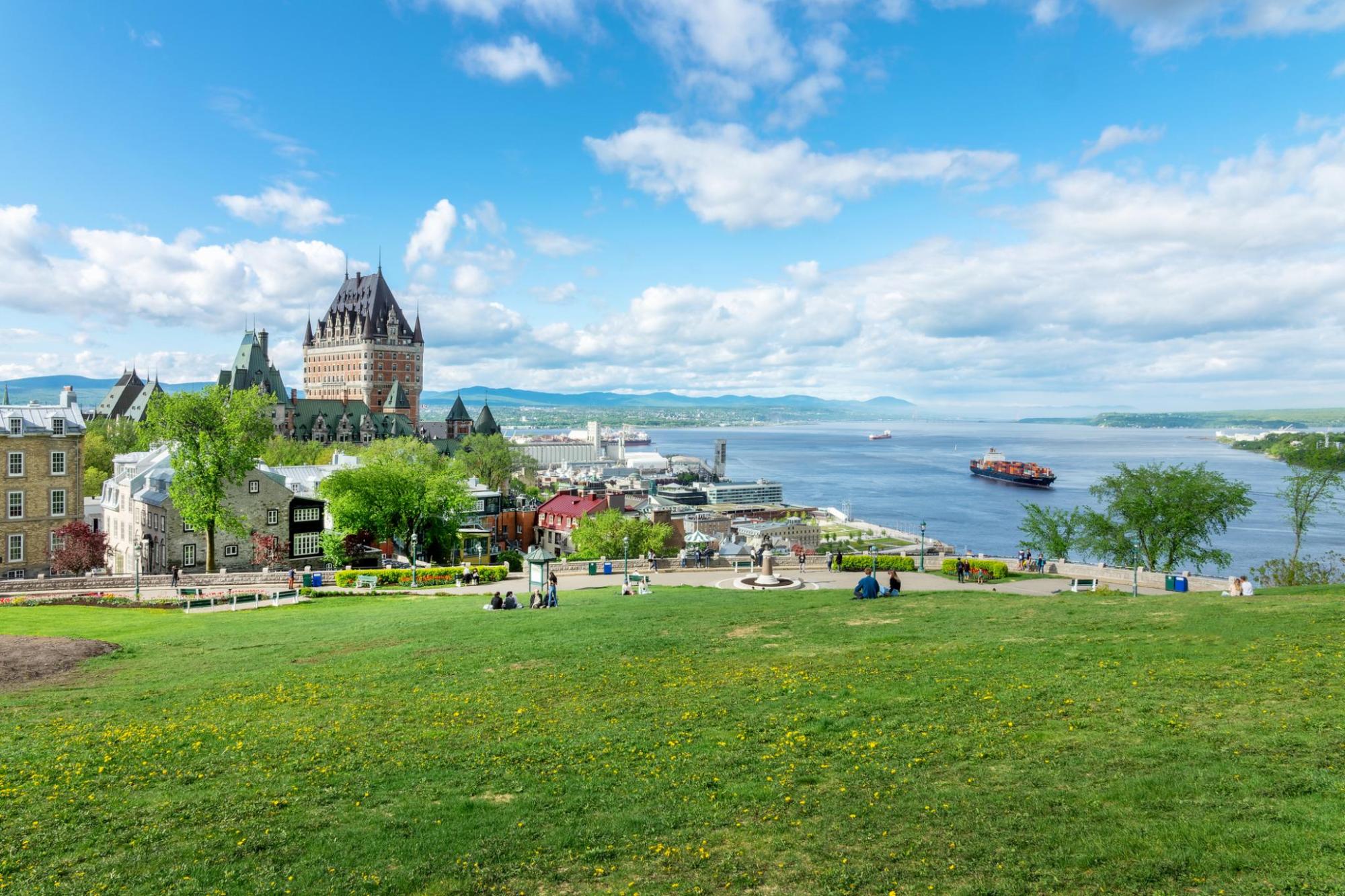
- Summer (June–August) is peak season, while winter (late January–mid-February) brings the Carnaval de Québec and the Ice Hotel – two of the city’s biggest draws
- Vieux-Québec is best explored on foot, with the funicular, RTC buses, and the Québec–Lévis ferry covering everything else
- French is the official language and tipping (around 15%) is customary – suggested tips are now calculated on the pre-tax total
Perched above the St Lawrence River and wrapped in 2.9 miles of fortified walls, Quebec City packs more history into a few square miles than almost anywhere else in North America.
Visiting Quebec City for the first time comes with a few practical questions – when to go, how to get around and how much French you’ll need. This guide covers it all, from transportation and neighborhoods to tipping and tap water, so you can plan your travel to Quebec City with confidence.
When to visit Quebec City
Each season gives the city a different personality. Summer (June–August) brings warm days around 77°F, terrace dining and the Festival d’été de Québec, an 11-day music festival each July.
Fall paints the surrounding hills in reds and golds, with mild temperatures lasting into October. Winter transforms the streets with snow, twinkling lights and the Carnaval de Québec, while spring offers thinner crowds and gradually warming days.
There’s no wrong answer here – the question is less about when the city is at its best and more about which version of it appeals most.
Peak vs. off-peak
July and August are the busiest months for visiting Quebec City, when accommodation prices climb and queues form at big-name attractions. Late January to mid-February sees a second peak thanks to the Carnaval and the Ice Hotel.
For lower rates and a calmer pace, the shoulder seasons—May to early June and September to October—combine pleasant weather with better availability. Booking a few months ahead pays off whichever season you choose, especially for stays inside the walls.
Outside Carnaval dates, deep winter (early December and March) can be surprisingly good value, with snow still on the ground and hotel rates at their gentlest.
How long to stay in Quebec City
A Quebec City visit of two to three days covers the headline sights: Old Quebec, the Citadelle, the Plains of Abraham, and the Petit-Champlain district. Stretching that to four or five days opens up day trips to Montmorency Falls, Île d’Orléans, and Jacques-Cartier National Park. It also gives you time to linger over a café crème (an espresso combined with steamed milk) while people-watching on Dufferin Terrace.
Travelers combining the city with Montreal often split a week between the two – the train takes a little over three hours. Whatever the length of stay, building in one unscheduled afternoon tends to pay off, as the old town rewards aimless wandering as much as any itinerary.
How to get around Quebec City
The historic center is compact, so most visitors mix walking with the occasional bus, funicular ride, or ferry crossing. Here’s how each option works.
Car rental
Thanks to that compact center, a car is only worth renting for excursions further afield – Île d’Orléans, the Charlevoix region, or winter trips to the Ice Hotel at Valcartier, around 30 minutes north. Within the walls, parking is limited and the narrow streets are easier on foot. Many hotels outside Vieux-Québec (Old Quebec) offer parking, which suits a pick-up-and-go approach to day trips.
Walking
Most of Vieux-Québec’s highlights sit within a 20-minute walk of each other, making walking the most rewarding way to explore. The Upper and Lower Towns are linked by staircases, including the Escalier Casse-Cou (‘Breakneck Stairs’), the city’s oldest. Comfortable shoes earn their keep on the cobblestones and slopes – and every wrong turn tends to lead somewhere photogenic.
The funicular
Running since 1879, the Funiculaire du Vieux-Québec climbs the cliff between Dufferin Terrace and the Petit-Champlain district at a 45-degree angle, with views over the St Lawrence on the way. A one-way ride costs around CAD 6 and the funicular accepts cash only, so it helps to keep a few Canadian dollars handy. It runs daily from morning until late evening – a welcome shortcut once legs tire of the stairs.
RTC bus system
Quebec City’s buses are run by the RTC, with the frequent Métrobus routes 800 and 801 linking the center to outlying districts. Tickets can be bought through the RTC Nomade Paiement app, which also shows real-time schedules, or loaded onto an Occasional card from sales points around the city.
Paying cash on board requires exact change. Day passes and unlimited weekend passes suit busier sightseeing schedules. Children aged 12 and under travel free with an adult. In summer, the seasonal Route 400 runs along the riverside Promenade Samuel-De Champlain on weekends and holidays – a scenic way to reach the Petit-Champlain district from Sainte-Foy.
Quebec–Lévis ferry
The ferry to Lévis doubles as one of the cheapest sightseeing trips in the city. The crossing takes 12 minutes and serves up the classic postcard view of Château Frontenac rising above the old town – especially striking at sunset or when ice drifts down the river in winter. Departures run from 6:00 am until well after midnight, every 20–30 minutes during the day, and foot passenger fares cost a few dollars each way.

Where to stay during your trip to Quebec City
Each central neighborhood has its own rhythm, and all four below sit within easy reach of the main sights.
Vieux-Québec
The walled old town puts you steps from Château Frontenac, Dufferin Terrace, and the Petit-Champlain boutiques. Heritage buildings house everything from boutique hotels to guest houses, and waking up inside a UNESCO World Heritage site has obvious appeal for first-time visitors. Light sleepers may prefer rooms away from the busiest streets in midsummer, when the district stays lively late into the evening.
Saint-Roch
Down in the Lower Town, Saint-Roch is the city’s creative quarter, with microbreweries, independent coffee shops, and some of the most inventive restaurants in town along rue Saint-Joseph. Accommodation tends to cost less than inside the walls, and the old town is reachable in around 20 minutes on foot or by a short bus ride – a strong base for travelers who like their evenings local.
Saint-Jean-Baptiste
Climbing the hillside just outside the walls, Saint-Jean-Baptiste is a residential neighborhood with a bohemian streak. Rue Saint-Jean is its spine, lined with bakeries, épiceries, and long-standing local institutions, including a grocery store trading since 1871. Staying here means living a little more like a local while remaining a ten-minute walk from the old town gates.
Montcalm
West of the walls, Montcalm pairs leafy residential streets with the city’s cultural heavyweights – the Musée national des beaux-arts du Québec and the Plains of Abraham are both here. Grande Allée’s restaurant terraces buzz on summer evenings, and the neighborhood suits travelers who like museums, parks, and a slightly slower pace within walking distance of the center.

Essential things to know about Quebec City
Before you go, a few practical travel tips can help you make the most of your first time in Quebec City and make sure you have a smooth and memorable trip.
Learn a few French phrases
French is the official language of Quebec, and daily life here runs in it. Staff in hotels, restaurants, and attractions generally speak English, but opening with a bonjour (hello) or merci (thank you) is appreciated and tends to be met warmly.
A simple parlez-vous anglais? (do you speak English?) smooths any conversation that needs to switch languages. Menus in the tourist quarters are usually bilingual, and most signage follows suit, so getting by is straightforward even without a word of French.
Carry a card and a little cash
Credit and debit cards, including contactless payment, are accepted almost everywhere, from restaurants to market stalls. A small amount of cash is still good to have on hand – the funicular only takes cash, and exact change is needed to pay bus fares on board. ATMs are easy to find throughout the center.
Drink the tap water
Tap water in Quebec City is safe to drink, so a refillable bottle saves both money and plastic. Restaurants will happily bring water with meals on request – asking for de l’eau du robinet (tap water) does the trick, though just asking for l’eau will likely work. If you want bottled water, you’ll need to ask for une bouteille d’eau (a bottle of water).
Tip on the pre-tax amount
Tipping is customary in Quebec, with 15% the usual baseline in restaurants, bars, and taxis. Since May 2025, provincial rules require suggested tips on payment terminals to be calculated on the pre-tax total rather than the final bill, which keeps things transparent. The amount remains at your discretion, and tipping is less common for counter service or takeaway.
Expect taxes on top of listed prices
Displayed prices in stores and restaurants don’t include sales tax, so around 15% (federal and provincial taxes combined) is added at the till. Factoring this in helps with budgeting. If you’re wondering if Quebec City is expensive to visit, the answer compares favorably with other major Canadian cities, particularly for dining and stays outside the walls.
Pack layers for the season
Quebec City’s seasons commit fully – summer days often reach 77°F or more, while January and February regularly sit well below freezing. Winter visitors who pack thermal layers, waterproof boots, and proper gloves are rewarded with snowy streetscapes, the toboggan run on Dufferin Terrace and smaller crowds at main sights.
Choose footwear for hills and cobbles
The city is built on a cliff, so steep streets, staircases, and cobblestones come with the territory. Supportive shoes with decent grip make the climb between Lower and Upper Town far more enjoyable – particularly in winter, when icy patches reward sturdy soles and an unhurried pace.
Plan around festival dates
The Carnaval de Québec (late January to mid-February) and the Festival d’été (July) fill the city with energy – and hotels too. Traveling during these events is a highlight in itself, but accommodation books up months ahead and rates rise, so early reservations make all the difference.
Map out day trips in advance
Montmorency Falls, at 272 feet, stands taller than Niagara and sits only 15 minutes from the center, reachable by bus or car. Île d’Orléans, a pastoral island of farm stands and cider houses, is easiest to explore with a rental car or on a tour. A little planning turns either into a relaxed half-day.
Book big experiences early
The Ice Hotel (Hôtel de Glace) is the headline act for cold-season visitors – it’s rebuilt each winter at Valcartier and opens from early January to late March. Overnight stays sell out months in advance—February weekends are often fully booked by late fall—though day visits are easier to arrange. Popular Vieux-Québec restaurants also reward weekend reservations.
Top things to do when visiting Quebec City
At the top of most first-timers’ lists when visiting Quebec City are:
- Strolling Dufferin Terrace beneath Château Frontenac
- Browsing the boutiques of Petit-Champlain
- Walking the fortifications of The Citadelle, the Plains of Abraham and the Musée de la civilisation add history and culture
- Montmorency Falls delivers natural spectacle just outside town
- In winter, a night or a day visit at the Ice Hotel ranks among Canada’s most memorable experiences

Quebec City travel tips: Hidden spots
Away from the main streets, rue Sous-le-Cap—squeezed between cliff and rooftops in the Lower Town—is one of the city’s oldest and narrowest lanes, strung with footbridges and flower boxes. West of the center, Parc du Bois-de-Coulonge offers manicured gardens and river views that most visitors walking the nearby Plains of Abraham never find. Both make for an easy detour with a camera in hand.

A little preparation goes a long way in Quebec City
Quebec City rewards a little preparation: A few French phrases, layered clothing, and early bookings for festival season or the Ice Hotel. With its walkable center, reliable buses, and that 12-minute ferry view, getting around is part of the pleasure. Whether you’re planning a weekend or a full week, these things to know before visiting Quebec City should leave more time for the croissants, the ramparts, and the river. Bon séjour! (Enjoy your stay!)
Disclaimer: The views and opinions expressed are those of the author and don't necessarily reflect the official policy or position of our company.