
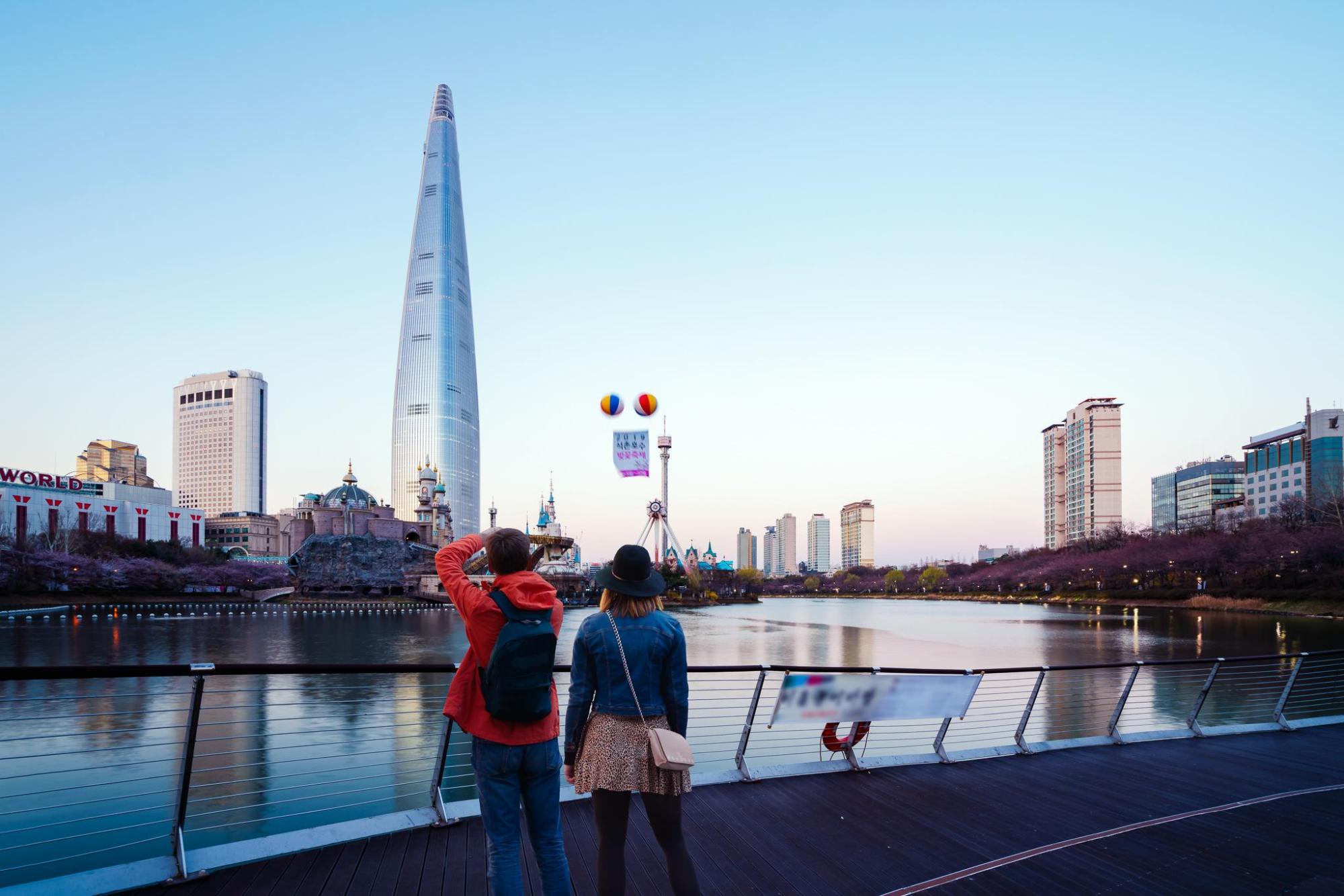
- Spring (April–May) and fall (September–November) are the most popular seasons, offering mild weather and Seoul's most iconic scenery
- The T-money card is the simplest way to pay for metro, bus, and taxi journeys – pick one up as soon as you arrive
- Seoul has many customs around dining, lining up, and public behavior like bowing slightly when greeting someone
Visiting Seoul for the first time is one of travel's great experiences – and a little preparation makes it even better. As one of the world's great megacities, South Korea's capital moves fast, sprawls wide, and rewards those who come prepared. From navigating a metro system that would make most cities envious to knowing when to hand over something with both hands, a little preparation goes a long way. Here's what to have on your radar before you go.
When to visit Seoul
Seoul has four seasons and each has a distinct character. Visiting Seoul in spring or falls tends to be the most rewarding: Temperatures are mild, skies are clear, and the city looks its finest.
Peak vs. off-peak
Spring (April to May) brings cherry blossoms to parks and riverbanks across the city, generally drawing large crowds and higher accommodation prices. Fall (September to November) is similarly popular, with foliage turning in shades of red and gold across Namsan and Bukhansan. As both spring and fall are peak travel periods – booking well ahead is strongly advised.
Summer (July to August) is the monsoon season. Temperatures regularly exceed 86°F, humidity is high, and heavy rain is a near-daily occurrence. It's typically a busier time for international arrivals, and while the heat and humidity are at their peak, air-conditioned metro lines, indoor markets, and basement cafés make it entirely manageable.
Winter (December to February) brings cold and occasional snow, but also quieter streets, lower rates, and a different kind of appeal. Snow-dusted palaces and the warmth of a late-night jjimjilbang (public bathhouse) have their own character.
How long to stay in Seoul
A minimum of four to five days gives a solid grounding in the city's major neighborhoods and attractions. First-time visitors can comfortably cover the historic center, a couple of palaces, a traditional market, and one or two of the city's distinct districts in that time.
Whereas, a week opens things up considerably – enough to slow down, explore beyond the obvious, and build in a day trip or two without feeling rushed.
Seoul also works well as a base for the surrounding region. Nami Island, a scenic river island around 1.5–2 hours from the city center by train and ferry, is one of the most popular half-day or full-day escapes. It’s particularly picturesque in fall, when its tree-lined paths turn vivid shades of red and gold. Suwon Hwaseong Fortress, a well-preserved 18th-century walled city, is reachable in under an hour by metro and makes for a straightforward half-day out. Neither requires advance planning beyond buying a train ticket.
How to get around Seoul
Seoul has one of the most efficient public transportation systems in the world, with clear English signage throughout.
Metro
The Seoul Metro is the backbone of the city. With more than 20 lines and hundreds of stations spanning the wider metropolitan area, the core lines running through the city connect virtually every neighborhood worth visiting. Stations are well signposted in English, trains run frequently from around 5:30 am to midnight, and the carriages are clean and air-conditioned. For first-time visitors to Seoul, it's the most reliable way to navigate the city.
Buses
Seoul's bus network fills in the gaps the metro doesn't reach. There are several color-coded types: Blue buses cover major arterial routes, green buses operate shorter neighborhood loops, and red buses connect Seoul to surrounding satellite cities. Routes can be trickier to follow, so apps like Naver Maps are a real help here.
Taxis
Taxis and rideshare options are plentiful, reasonably priced, and a good option for late-night journeys or when carrying luggage. Most taxis accept T-money cards and card payment, though confirming before setting off is worth doing.
Airport Rail Express (AREX)
The Airport Rail Express connects Incheon International Airport directly to Seoul Station and several other central stops. The all-stop service takes around an hour, though the express is faster – skipping intermediate stations entirely. Tickets for the all-stop service can be purchased using a T-money card, whereas the express requires a separate ticket bought with card or cash at the airport counter or kiosks.
Where to stay during your trip to Seoul
Seoul's neighborhoods each have their own character, so where you stay shapes how the city feels. Myeongdong sits at the center of the action and is one of the most convenient bases for first-time visitors, while Hongdae has a younger, creative energy, and Gangnam offers a more modern, upscale experience.

Essential things to know about Seoul
Know the Subway etiquette
Seoul's metro has its own unspoken code. Priority seats—marked in a different color near the carriage doors—are reserved for elderly passengers, pregnant travelers, and those with disabilities. Eating and drinking on the metro is generally frowned upon ,and talking loudly or taking calls is equally rare. Most passengers travel in near-silence, often with headphones in. Following the lead of those around you is the simplest approach.
Buy a T-money card
The T-money card is a rechargeable smart card that works across Seoul's metro, buses, and most taxis. Picking one up on arrival is straightforward – vending machines at Incheon Airport's transit center dispense them, as well as convenience stores across the city. Most top-ups require cash (Korean won), so keeping some on hand is useful. The card costs around ₩4,000–5,000 to buy and offers small fare discounts compared to single tickets. Tapping in and out on every journey is essential for the fare to register correctly.
Top tip: Those planning to stay entirely within Seoul may find the Seoul Climate Card handy. Available as a one- to seven-day unlimited pass (from around ₩5,000 per day), it covers Seoul's metro and buses without the need to top up per journey. Unlike the T-money card, it works solely within Seoul, not wider South Korea.
Respect local culture
Seoul is a city with customs around respect and social conduct, so being in the know helps you navigate interactions smoothly:
- When giving or receiving something—a business card, a gift, a drink—using both hands is standard practice and shows consideration.
- The same applies when paying at a store or restaurant: Handing over money with one hand while supporting your wrist with the other is a common and polite gesture.
- Bowing slightly when greeting someone is the norm and removing shoes before entering a home is expected without exception.
- At the dinner table, rice and soup bowls stay on the table throughout the meal, as lifting them to eat from is considered poor etiquette. Instead, use a spoon to bring food to your mouth.
Consider tipping etiquette
Tipping isn't customary in South Korea and, in some contexts, can cause confusion. Restaurants, taxis, hotels, and cafés all operate on a no-tip basis – the price on the bill is what's expected. Service is generally considered part of the job rather than something to be rewarded separately.
Use Naver Maps over Google Maps
Google Maps has significant limitations in South Korea due to domestic mapping regulations. Naver Maps is the local standard and far more accurate for routing, transportation times, and business listings. The app is available in English and is worth downloading before arrival. Kakao Maps is another reliable alternative.
Carry some (but not much) cash
Seoul is highly cashless – cards are accepted almost everywhere and mobile payments are common. That said, some traditional markets (including Gwangjang Market), smaller street food vendors, and T-money top-up machines are cash only. Keeping a small amount of Korean won on hand avoids any mishaps at these spots.
Learn a few Korean words
English signage is widespread across Seoul's metro, major attractions, and most tourist-facing businesses, so getting by without any Korean is entirely possible – though in more residential neighborhoods like Mangwon-dong, English is less commonly spoken. So, learning some basics tends to be warmly received. A handful of phrases covers most everyday situations:
- Annyeonghaseyo (안녕하세요) for "hello"
- Gamsahamnida (감사합니다) for "thank you"
- Sillyehamnida (실례합니다) for "excuse me"
- Eolmayeyo? (얼마예요?) for "how much is this?"
Knowing some basic Korean script (Hangul) can also help to open up menus, street signs, and market stalls considerably.

Top things to do when visiting Seoul
Gyeongbokgung Palace is the most iconic of Seoul's five royal palaces, dating from the 14th century and still a striking presence at the foot of Bugaksan mountain. Nearby, Jogyesa Temple offers a quieter contrast – a Buddhist temple sitting in the middle of the city with a calm atmosphere. Gwangjang Market, feeding locals since 1905, is a destination for street food lovers seeking bindaetteok (mung bean pancakes), mayak kimbap, and braised beef.
Bukchon Hanok Village clusters hundreds of traditional hanok houses across a hillside between two palaces. N Seoul Tower on Namsan mountain offers panoramic city views, best experienced at dusk as the city lights up. The Han River parks are a side of Seoul many first-time visitors miss – locals gather here for picnics, cycling, and riverside walks. Myeongdong draws shoppers and street food lovers, whereas Hongdae offers live music and late nights.

Seoul travel tips: Hidden gems
For those visiting Seoul who want a more local experience, Mangwon-dong—in the city's Mapo district—is one of the most quietly rewarding neighborhoods to spend a morning or afternoon. Tucked between the Han River and the more commercially charged Hongdae area, it has a residential, unhurried feel – traditional market stalls, indie cafés, and riverside walks that attract mostly locals rather than visitors. Mangwon Market itself makes for a gentler, less crowded alternative to Gwangjang.
Whereas, Euljiro, a working printing district by day, is worth a weeknight visit after dark when the alleyways shift character and fill with some of the city's most atmospheric bars.
Seoul is awaiting
Visiting Seoul means moving between 14th-century palace gates and glass towers, centuries-old markets and contemporary design districts, riverside parks and underground music venues. Come prepared—T-money card in hand, Naver Maps downloaded and an appetite for both history and street food—and the city opens up quickly.