
- Our three-day Quebec City itinerary takes in Old Québec’s UNESCO-listed fortifications, Terrasse Dufferin and Place Royale on Day 1, before venturing to Montmorency Falls and Île d’Orléans on Day 2
- Old Québec is highly walkable and compact, but the Day 2 excursion to Montmorency Falls and Île d’Orléans is easiest with a rental car
- Summer (July) brings the Festival d’été de Québec to the Plains of Abraham; visiting in February means the Quebec City Winter Carnival, the largest winter carnival in the Western Hemisphere
Few cities in North America can match the layered history and distinct culture of Quebec City. With its UNESCO-listed fortifications, steep cobblestone streets, and a food scene that stretches from traditional Québécois cuisine to cutting-edge bistros, it packs an extraordinary amount into a compact, walkable area.
This Quebec City itinerary covers three days of highlights – from the iconic upper town and the thundering Montmorency Falls to a rural island day trip and the city’s liveliest neighborhood restaurants. Whether this is your first visit or your fifth, there’s always more to take in.
Day 1: Upper town, lower town, and the city walls
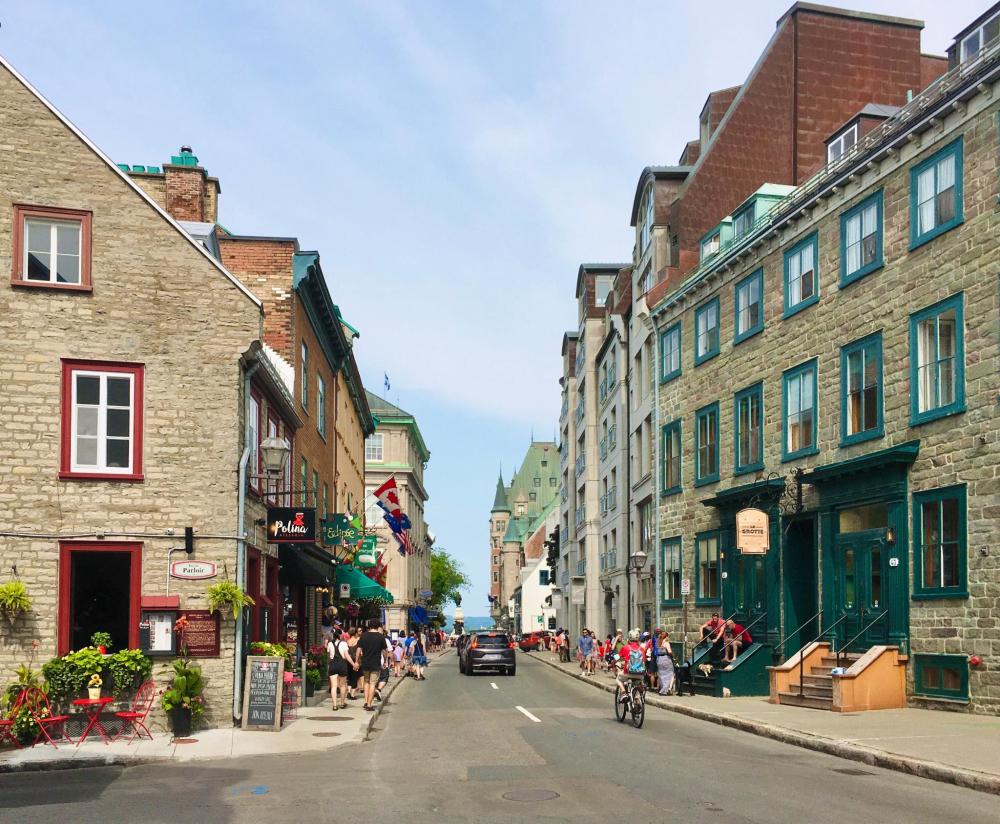
The best introduction to Quebec City is a full day spent moving between the upper and lower halves of Old Québec – two distinct worlds connected by steep stairs, cobbled lanes, and the historic funicular.
Morning: the upper town and the citadel
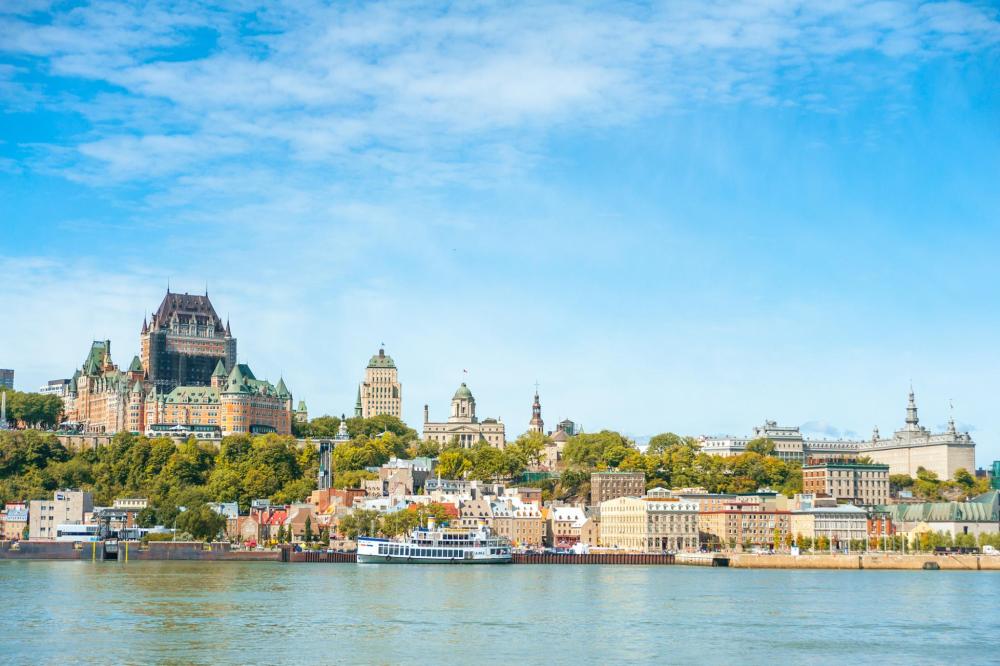
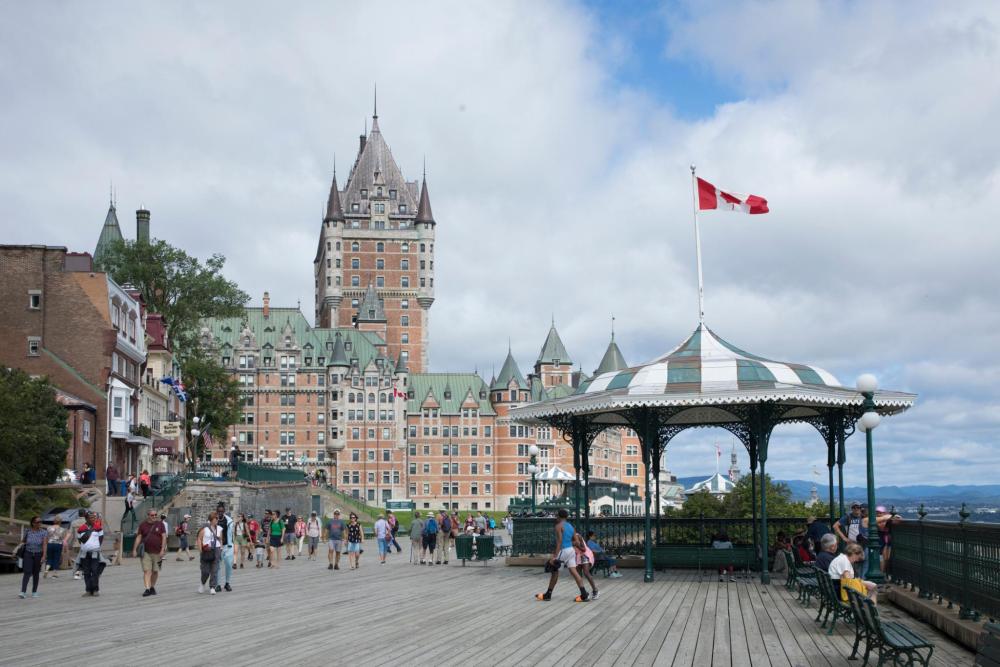
The Quebec City itinerary starts at the Terrasse Dufferin, the long wooden boardwalk that runs alongside the Fairmont Le Château Frontenac. The hotel itself has dominated the skyline since 1893 and remains one of the most photographed buildings in Canada – even without staying there, the lobby is worth stepping into. From the terrace, views stretch out across the St Lawrence River and down to the lower town below.
A short walk along the Rue St-Louis leads to La Citadelle, the star-shaped fortress that still houses the Royal 22e Régiment. During summer, the Changing of the Guard takes place daily at the parade grounds – worth arriving early to watch. The fortress sits at the highest point of Cap Diamant and forms part of the city’s 2.9-mile ring of fortifications, which together make Québec City the only remaining fortified city north of Mexico.
After the citadel, the ramparts themselves reward a slow wander. Porte Saint-Louis and Porte Saint-Jean are the most impressive of the city gates, and the walls offer elevated views over both the old town and the plains beyond.
Afternoon: lower town and Place Royale
From the Terrasse Dufferin, the funicular—running since 1879—drops visitors down toQuartier Petit-Champlain, one of the most lively shopping streets in the city. Stone buildings dating from the 1700s line narrow lanes filled with independent boutiques, galleries, and cafés.
A few minutes on foot leads to Place Royale, one of the oldest commercial districts in North America. The Notre-Dame-des-Victoires church, built in 1688, anchors the square and is well worth stepping inside – look up for the remarkable model of a French warship suspended from the ceiling, a survivor from the era of New France.
From Place Royale, the Old Port stretches along the waterfront. The Musée de la Civilisation sits nearby and offers engaging interactive exhibitions on the history and culture of Québec – a good option if the weather turns.
Evening: dinner in Saint-Jean-Baptiste
For dinner, heading just outside the city walls to the Saint-Jean-Baptiste neighborhood introduces a side of Québec City that feels thoroughly local. Rue Saint-Jean is lined with independent restaurants, bistros, and wine bars. Chez Boulay is a well-regarded spot for boreal-inspired Québécois cooking, with dishes built around wild mushrooms, birch syrup, and regional produce. The area stays lively well into the evening.
Day 2: Montmorency Falls and Île d’Orléans
Day 2 of this Quebec City 3-day itinerary heads out of the city for a full day of natural scenery and rural island life. A rental car makes this easy, though bus and tour options exist for those without one.
Morning: Montmorency Falls
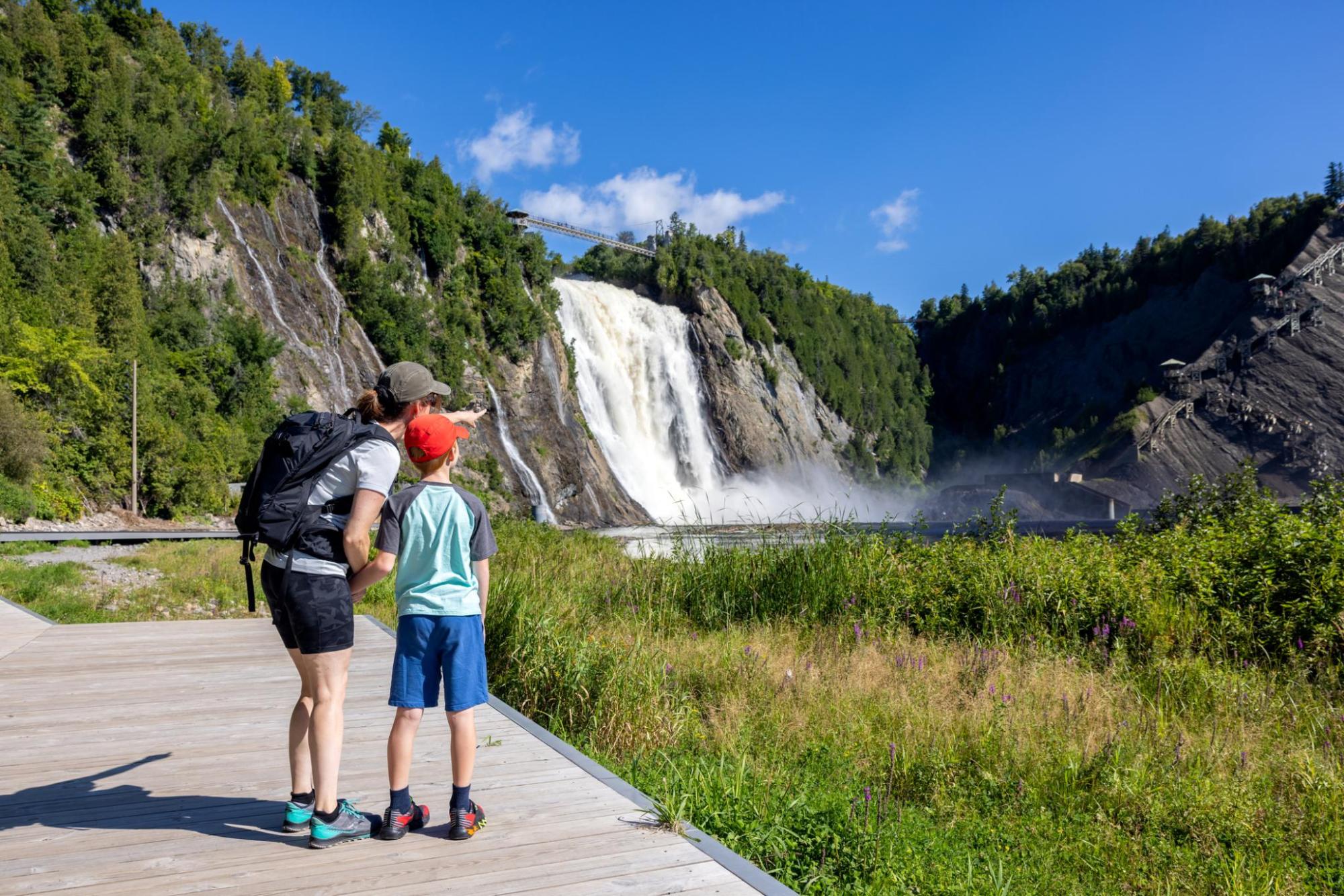
Parc de la Chute-Montmorency sits around 7.5 miles from Old Québec – roughly 15 minutes by car – and the falls are immediately striking. At 83 meters, they are a full 30 meters taller than Niagara Falls, though considerably narrower. The park is open year-round, and the experience shifts significantly with the season: in summer, the 487-step panoramic staircase and the 300-meter zipline are both in operation; in winter, the spray freezes to form the famous pain de sucre, or sugarloaf, an ice cone that builds up at the base of the falls.
A cable car runs between the base and the top of the cliff, where Manoir Montmorency – a historic villa containing a restaurant and interpretation center – provides the starting point for the cliff-top boardwalk. The suspension bridge spanning the crest of the falls is an impressive spot to pause, with views across the St Lawrence to Île d’Orléans on the opposite bank.
Afternoon: Île d’Orléans
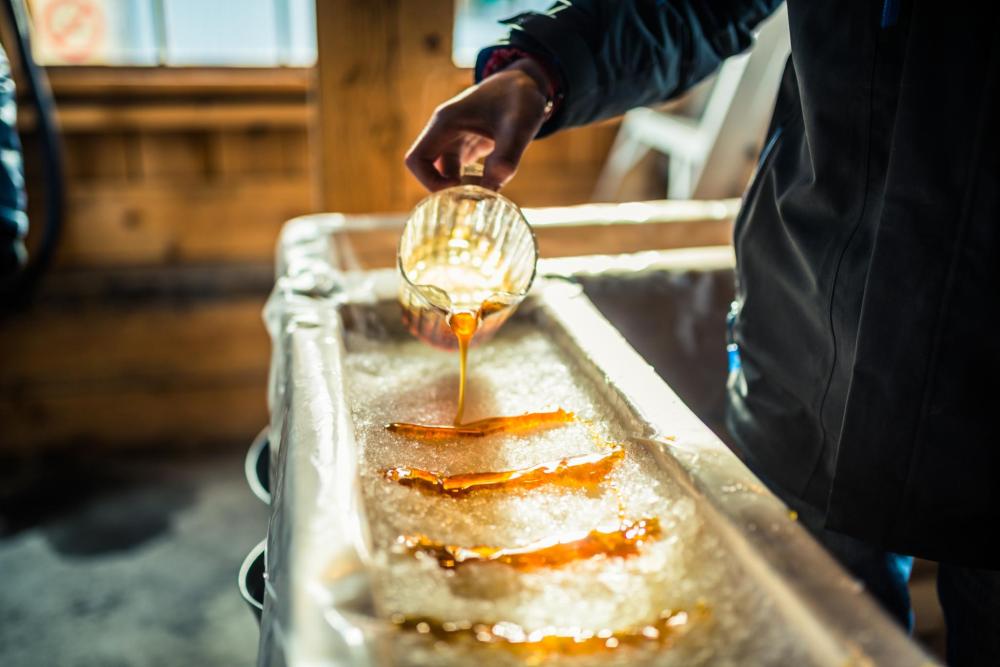
The bridge to Île d’Orléans sits just opposite Montmorency Falls, making the two an easy pairing. The island – known as the “Garden of Québec” – is largely agricultural, with six villages strung along the 41-mile loop of Chemin Royal. Local farms supply much of the produce used in Québec City’s restaurants, and roadside stands and producers’ shops are at their liveliest from mid-June to mid-October.
Worth factoring in are a wine or cider tasting at one of the island’s vineyards—Cassis Monna & Filles specializes in blackcurrant wines and offers tastings with views of Montmorency Falls—along with a stop at the Chocolaterie de l’Île d’Orléans in Sainte-Pétronille for chocolate-dipped ice cream and panoramic views of Québec City across the water. Driving the full loop takes around an hour without stops; most visitors allow three to four hours with them.
No public transport serves the island’s villages, so a car is the most practical option. A guided bus tour from Old Québec is an alternative for those who prefer not to drive.
Evening: dinner in Saint-Roch
Back in the city, the Saint-Roch neighborhood is where Québec City’s most creative dining scene is concentrated. Around a 15-minute walk from Old Québec, Rue Saint-Joseph Est is lined with award-winning restaurants, microbreweries and bars. Le Clocher Penché is a well-established bistro serving seasonal Québec-sourced dishes – Battuto, with only 24 covers, is the neighborhood’s most celebrated Italian spot and books up fast. Both sit comfortably in the evening, and the neighborhood continues well after dinner for those who want to extend the night.
Day 3: the Plains of Abraham, Montcalm, and the Musée des Beaux-Arts
The final day of this Quebec City itinerary in three days covers the broader city – areas that sit just outside the old walls but are as much a part of the Québec City experience as the cobblestoned core.
Morning: the Plains of Abraham
The Battlefields Park, known to most as the Plains of Abraham, is the site of the 1759 battle that changed the course of Canadian history. Today the park is a broad, open expanse used by locals for running, cycling, and cross-country skiing in winter – though the history is easy to engage with via the interpretation center.
In summer, the Plains host the main stage of the Festival d’été de Québec (FEQ), which runs for 11 days in July and draws major international headliners to one of Canada’s largest music festivals. In February, the same area fills out as one of the central sites for the Québec Winter Carnival – the largest winter carnival in the Western Hemisphere, running for ten days with ice sculptures, night parades, and the iconic Bonhomme Carnaval.
Afternoon: Musée national des Beaux-Arts and Avenue Cartier
At the southern edge of the Plains, the Musée national des Beaux-Arts du Québec holds more than 40,000 works spanning the 17th century to the present day, including one of the most significant collections of Inuit art in the country. It’s a substantial collection and easily fills two to three hours.
Directly to the north, the Montcalm neighborhood surrounds Grande Allée – a wide boulevard lined with restaurants, terraces and bars that becomes especially animated in summer. Avenue Cartier, running perpendicular, is a quieter but equally worthwhile street of independent food shops, cafés, and boutiques, and a good place to pick up local produce, cheeses, or bottles of Québécois wine to take home.
Evening: a farewell meal in Old Québec
A final evening is well spent back inside the city walls. Aux Anciens Canadiens, housed in one of the oldest buildings in Québec City on Rue Saint-Louis, is the go-to for a proper introduction to traditional Québécois cooking – think tourtière, pea soup, and sugar pie. Alternatively, the Morrin Centre on Rue Saint-Stanislas—Québec City’s first prison, English college, and library, all in one 18th-century building—sometimes runs evening events worth checking in advance. For a nightcap, the bars, and wine spots along Rue Saint-Jean stay open late.
Top tips for your stay in Québec City
A few things that will help any first-time visitor get the most out of their time here:
Wear comfortable shoes
Old Québec is built on a cliff, with the upper town sitting around 60 meters above the lower. The connections between them—staircases, steep lanes, and the funicular—are part of the experience, but the hills and cobblestones add up over a full day. Flat, sturdy footwear makes a significant difference.
Learn a few words of French
Québec City is the most francophone major city in North America, and while English is widely understood in tourist areas, attempting even a few words of French is genuinely appreciated:
- Hello – bonjour
- Thank you – merci
- Please – s’il vous plaît
Menus, signs, and transport information are predominantly in French, so having a translation app on hand is useful.
Book ahead for popular restaurants
Restaurants like Battuto and Le Clocher Penché are small and regularly full, particularly at weekends. Booking a day or two in advance saves disappointment, especially in summer and during major festivals. The Old Québec waterfront restaurants also tend to fill up quickly in warm weather.
Time the visit around a festival
Québec City’s two biggest events transform the character of the city entirely. The Quebec City Winter Carnival (Carnaval de Québec) runs for ten days in early February and fills the streets with ice palaces, night parades, and outdoor activities. The Festival d’été de Québec brings 11 days of live music to the Plains of Abraham each July. Both are worth planning a trip around – but both also mean higher accommodation demand, so booking well in advance is advisable.
1, 2, and 4-day Québec City itinerary highlights
Not everyone has three full days, and some will want to stay longer. Here’s how to adjust:
- One day in Quebec City: focus on Old Québec. Walk the ramparts, ride the funicular between the upper and lower towns, spend time at Place Royale and finish the evening in the Saint-Jean-Baptiste neighborhood for dinner.
- Two days in Quebec City: add the Day 2 excursion to Montmorency Falls and Île d’Orléans. This pairs well with an evening in Saint-Roch for a contrast between the old city and the contemporary neighborhood dining scene.
- Four days in Quebec City: extend the itinerary with a half-day at Canyon Sainte-Anne, around 35 minutes east of the city, or take the Train de Charlevoix from Montmorency Falls along the river to Baie-Saint-Paul. The Onhwa’ Lumina immersive night walk in Wendake, 30 minutes from the city, tells the story of Huron-Wendat culture through a multimedia forest experience and is worth adding if time allows.
Three days in a city built to last
A Quebec City travel itinerary over three days covers a lot of ground – but Québec City rewards those who slow down as much as those who push through the highlights. The history is genuinely extraordinary: a UNESCO World Heritage city of 400-plus years, where French is still the daily language and the fortifications still stand. The food, the festivals, and the surrounding landscape add layers that keep bringing people back. Three days is a solid start – most visitors leave already thinking about a return.
Disclaimer: The views and opinions expressed are those of the author and don’t necessarily reflect the official policy or position of our company.