
- Ancient Rome on day one: the Colosseum, Roman Forum, and Palatine Hill set the scene, followed by the Aventine Keyhole and dinner in Testaccio
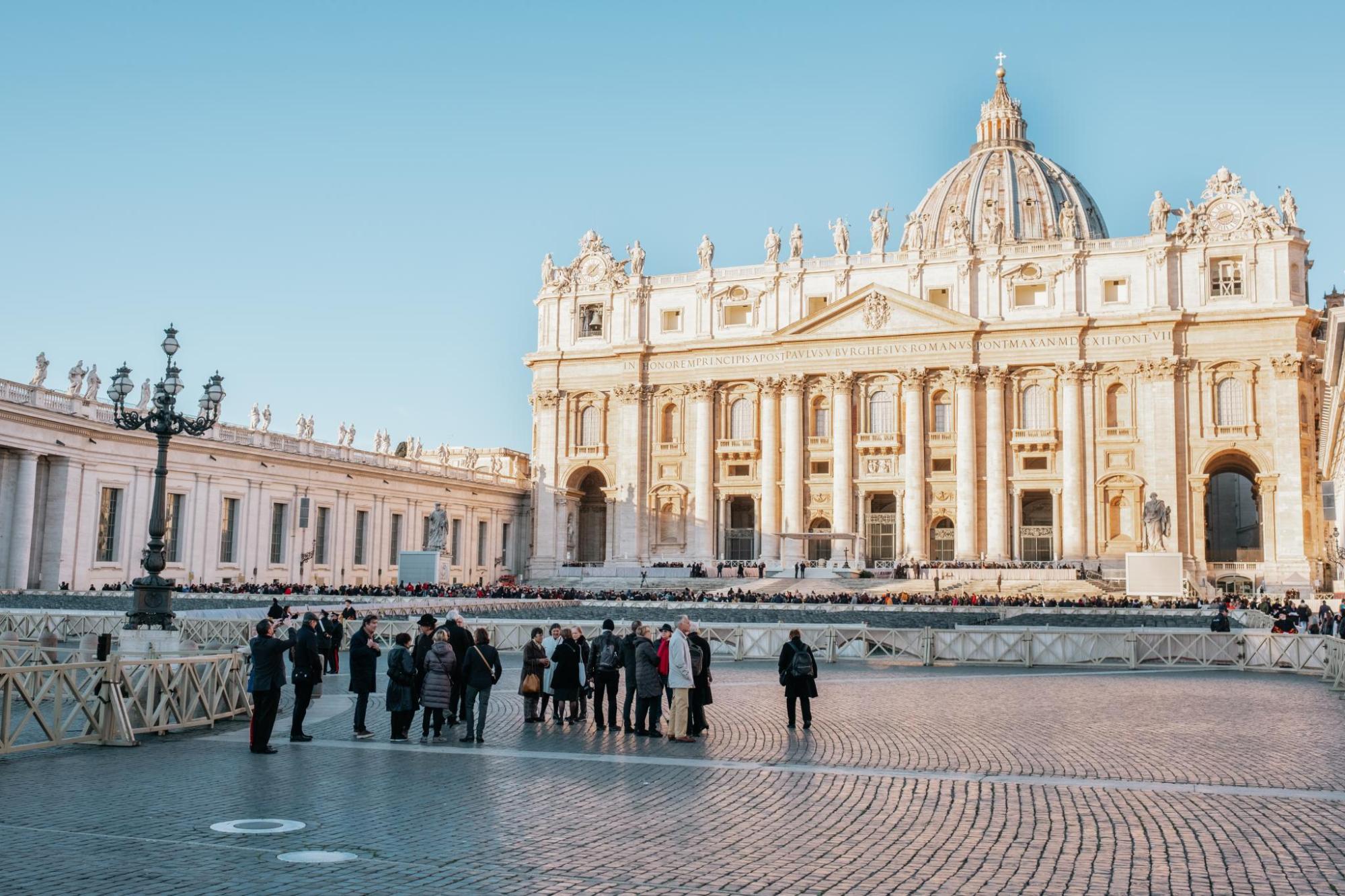
- The Vatican on day two: the Vatican Museums, Sistine Chapel, and St Peter's Basilica fill the morning – Trastevere's alleys and trattorias take care of the evening
- The historic center on day three: The Pantheon, Piazza Navona, and the Borghese Gallery round out a three-day Rome itinerary that covers the city's greatest hits – and a few quieter ones too
Three days in Rome sounds ambitious. It is. But it's also one of the most rewarding ways to see the Eternal City – enough time to take in the Colosseum, the Vatican, and the neighborhoods that locals actually love, without feeling like you've barely scratched the surface. This Rome itinerary moves at a pace that lets you breathe, eat well, and still fit in something unexpected around every corner.
Day 1: Ancient wonders and a neighborhood the guidebooks miss
Morning
Rome's ancient heart is the obvious place to begin a three-day Rome itinerary, and the Colosseum earns every superlative thrown at it. The sheer scale of the amphitheater—built in 70–80 CE and once holding up to 80,000 spectators—lands differently in person than in any photograph. Tickets must be booked in advance through the official website: Walk-up lines can stretch for hours, especially from April to October. A combined ticket covers the Colosseum, the Roman Forum, and Palatine Hill, which sit directly alongside it.
After the Colosseum, the Roman Forum rewards a slow wander. The ruined temples, triumphal arches, and ancient roads that once formed the civic and political center of the Roman Empire are more legible here than they might appear from a distance – especially with an audio guide or a short read beforehand. Palatine Hill, rising above the Forum, offers some of the best panoramic views over the ruins and is included on the same ticket.
Afternoon
From the ancient center, head south to the Aventine Hill – one of Rome's original seven hills and, for most visitors, refreshingly uncrowded. The Giardino degli Aranci (Garden of Oranges), also known as Parco Savello, offers wide views across the Tiber towards Trastevere and the Vatican. It's a good spot to sit, take stock, and eat a sandwich before moving on.
A short walk from the garden brings you to the Piazza dei Cavalieri di Malta – and the famous Aventine Keyhole. The keyhole belongs to a large green door, the entrance to the Priory of the Knights of Malta. Peer through it and the view is unexpectedly composed: The dome of St Peter's Basilica, perfectly framed at the end of a long garden avenue. What makes it genuinely unusual is that the garden belongs to a sovereign entity—the Order of Malta—meaning the view crosses three separate territories at once. There's no ticket, no booking ,and no charge: Just a short line and a moment worth savoring.
Evening
The Aventine sits directly above Testaccio, one of Rome's most local-feeling neighborhoods and one of the city's great food districts. The neighborhood's working-class roots run deep—it was once home to Rome's slaughterhouse—and the cucina romana that came out of that tradition is still going strong. Seek out a table at Flavio al Velavevodetto, which is built into the side of Monte Testaccio (a hill made entirely of ancient broken terracotta vessels) and serves some of the most well-regarded Roman classics in the city. Alternatively, the Testaccio market has plenty of standing-room street food options for something more casual.
Day 2: the Vatican, Trastevere, and an evening well spent
Morning
A Rome itinerary in three days needs at least one early start, and the Vatican Museums are the reason. Online booking is essential – there are no walk-up tickets. The booking window opens 60 days in advance and popular summer slots sell out three to four weeks ahead. Arriving at opening time (8:00 am) gives you the quietest galleries and the best experience in the Sistine Chapel before the crowds build.
The museums' holdings are vast—covering everything from Egyptian artefacts to Renaissance tapestries—but the Raphael Rooms and the Sistine Chapel are the gravitational center of most visits. Michelangelo's ceiling frescoes, painted between 1508 and 1512, and his later Last Judgment on the altar wall together represent one of the most ambitious artistic undertakings in history. St Peter's Basilica is free to enter and sits directly adjacent to the museums. The climb to the dome is a separate ticket but rewards the effort with extraordinary views across Rome.
Afternoon
Cross the Tiber and spend the afternoon in Trastevere, one of Rome's most atmospheric neighborhoods. The name translates roughly as "across the Tiber," and the area's tangle of cobbled lanes, ivy-draped buildings, and neighborhood piazzas has a feel quite different from the monumental center. The Basilica di Santa Maria in Trastevere—one of the oldest churches in Rome, with golden 12th-century mosaics covering the apse—is worth stepping inside. Outside, the piazza in front of it is a natural gathering point at any hour.
Trastevere is also a neighborhood for wandering without an agenda. The further from the main piazza, the quieter and more residential it gets. An hour on foot in the backstreets tends to produce more interesting discoveries than any list of sights.
Evening
Stay in Trastevere for dinner. Roma Sparita, on the quiet Piazza di Santa Cecilia, is one of the neighborhood's most-loved trattorias – best known for its cacio e pepe (spaghetti with black pepper and Pecorino Romano) served inside a hollowed-out parmesan wheel, a presentation that feels theatrical without being gimmicky. Tables fill quickly, so arriving early or booking ahead is a good idea. For something more low-key, the streets around Via della Lungaretta have plenty of smaller, neighborhood-style options.
Day 3: The historic center and a gallery worth the early alarm
Morning
The Pantheon is Rome's best-preserved ancient building – a temple completed around 125 CE whose unreinforced concrete dome remained the world's largest for over 1,300 years. Entry now requires a ticket (€5, bookable online on the Musei Italiani portal). The building doubles as a working basilica, so some time slots may be interrupted by services. Arriving early keeps queues manageable and the interior at its most serene, with the light from the oculus—the circular opening at the dome's apex—shifting as the morning progresses.
A short walk north brings you to Piazza Navona. Built on the site of the ancient Stadium of Domitian, the elongated piazza is lined with Baroque facades and anchored by Bernini's Fountain of the Four Rivers at its center. It's busy but navigable in the morning hours – worth a circuit rather than a destination in itself.
From Piazza Navona, it's a roughly 15-minute walk south to Campo de' Fiori – a working market square in the morning and a lively meeting point by evening. The market runs until around 2:00 pm and is a good place to pick up snacks, fresh produce, or a focaccia before the afternoon.
Afternoon
The Borghese Gallery operates on a strict timed-entry system, with two-hour slots and a hard cap of 360 visitors per session. Advance booking is essential—through the official Galleria Borghese website or trusted third-party providers—and slots fill weeks ahead in peak season. The gallery holds one of the finest collections of Baroque sculpture in existence: Bernini's Apollo and Daphne, The Rape of Proserpina, and David are all here, alongside paintings by Caravaggio, Raphael and Titian. The building itself—a 17th-century villa in the Villa Borghese park—adds to the experience.
The Villa Borghese gardens surrounding the gallery make for a pleasant walk before or after your slot. The park is large, freely accessible, and gives a sense of Rome at a slower pace.
Evening
End your Rome travel itinerary where Rome's evening begins: with an aperitivo (pre-dinner drink). The Prati neighborhood, just north of the Vatican and a short walk or bus ride from Villa Borghese, has a strong selection of bars along Via Cola di Rienzo and the surrounding streets. Order a Negroni or a Spritz and a spread of bar snacks—in Italy, the drinks almost always come with something to eat—and take stock of the city before dinner. For the final evening meal, Prati's trattorias tend to be a little less tourist-facing than those in the historic center, with menus that lean towards Roman staples over crowd-pleasers.

Top tips for your stay in Rome
A few things that make a real difference to how a Rome itinerary plays out:
Try all four Roman pastas
Roman pasta is a short list, and it's a very good one. The four classics—gricia (guanciale and pecorino), amatriciana (guanciale, tomato and pecorino), cacio e pepe (pecorino and black pepper), and carbonara (guanciale, eggs, pecorino, and pepper) – are all variations on a theme of pork fat and aged cheese, executed with varying skill across the city. Three days gives enough meals to work through them all. The version to order first depends on the neighborhood: Amatriciana in Testaccio, cacio e pepe in Trastevere, carbonara anywhere with a coal or wood oven in the back.
Book tickets for major attractions in advance
The Colosseum, Vatican Museums, and Borghese Gallery all operate timed-entry ticketing with strict visitor limits. Walking up without a booking in the high season—broadly April through October—risks missing them entirely. The Pantheon and Borghese Gallery in particular have the tightest caps. Booking two to four weeks ahead is sensible – for summer travel, even longer. Official museum and monument websites are the most reliable source of tickets.
Walk more, metro less
Rome's historic center is compact enough that most of this itinerary is walkable. The metro has only two main lines and misses many of the central sights entirely – buses cover more ground but can be slow in traffic. For the Vatican and Borghese Gallery, bus lines serve both well. The Colosseum is on Metro Line B (Colosseo station). For most other routes, the walk itself is part of the experience – Rome's streets tend to offer something at every turn.
Dress codes apply at religious sites
St Peter's Basilica, the Basilica di Santa Maria in Trastevere, and the Pantheon (which functions as a basilica) all require covered shoulders and knees. This applies regardless of the weather. A light scarf or a layer in a bag is the simplest solution and avoids being turned away at the door.

1, 2, 4, and 5-day Rome itinerary highlights
Short on time or thinking of extending the trip? Here's how the Rome itinerary scales:
- One day in Rome: Focus on ancient Rome. The Colosseum, Roman Forum, and Palatine Hill cover the morning – the Aventine Keyhole and a Testaccio dinner make a strong afternoon-to-evening arc.
- Two days in Rome: Add the Vatican on day two. A Rome itinerary in two days works well as ancient Rome is followed by the Vatican and Trastevere – a clean split between the city's two most iconic areas.
- Four days in Rome: A four-day Rome itinerary adds room for the Pantheon and Piazza Navona cluster (day three) and the Borghese Gallery on day four, with more breathing room in each neighborhood.
- Five days in Rome: With a Rome itinerary of five days, consider the Capitoline Museums (home to the original Marcus Aurelius statue and rooms of ancient sculpture), a visit to the Appian Way, or a day trip to the ancient Roman port city of Ostia Antica – a less crowded alternative to Pompeii with remarkably well-preserved streets and mosaics.

Three days, one city, no shortage of reasons to return
A three-day Rome itinerary is enough to see the landmarks that deserve their reputations and find a few corners that feel genuinely your own. The city has a way of making every visit feel both overwhelming and not quite long enough – which is precisely why most people who come once tend to start planning the return trip before they've left.
Disclaimer: The views and opinions expressed are those of the author and don't necessarily reflect the official policy or position of our company.