
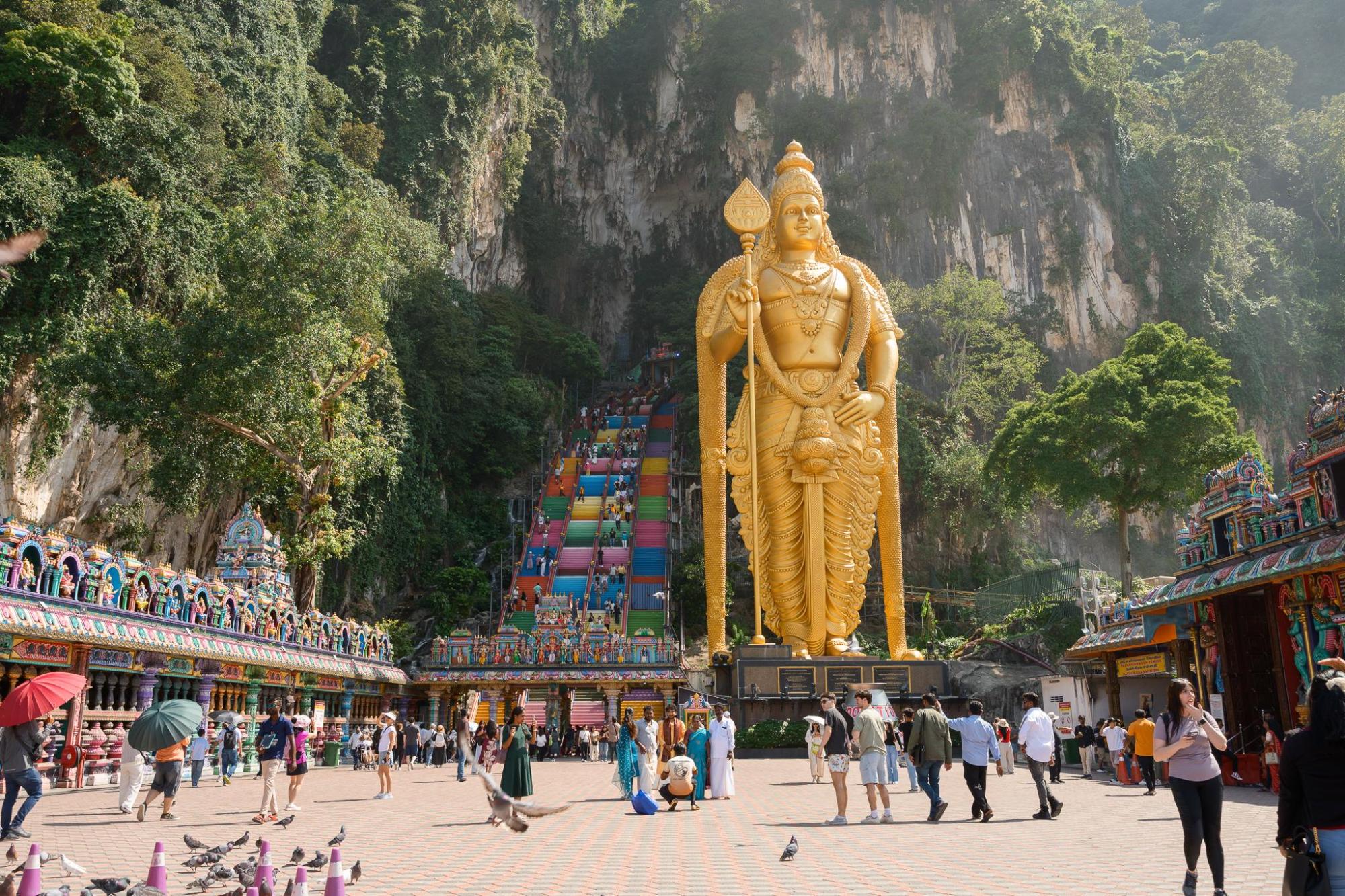
- Start in Kuala Lumpur to see Petronas Towers and Batu Caves
- Stay a night in the Cameron Highlands and wander through tea fields
- Finish the trip in Penang to discover the heritage and George Towns food scene
The country's mix of cultures and food is on full display in this seven-day Malaysia itinerary that starts in the capital Kuala Lumpur and then heads north. You'll see the picturesque tea fields of the Cameron Highlands, the trendy art and old-world charm of Ipoh, and then explore the cuisine and heritage of Penang's George Town. With only a week, this Malaysia itinerary focuses on the western side of the mainland. So, if you have an extra day or two, the city of Malacca is an obvious addition.
Day 1: Kuala Lumpur – arrive and visit Petronas Towers
Morning
Arrive at Kuala Lumpur International Airport, about 28 miles south of the city center, and transfer to your accommodation to settle in. Bukit Bintang, KLCC, or Chinatown are all convenient areas to stay in.
Afternoon
Start your exploration of Kuala Lumpur with one of the city's most iconic landmarks – Petronas Towers. First, head up the twin 1476–foot-high buildings for views at the Skybridge on level 41 and the main observation deck on level 86. Back on the ground, there's KLCC Park with a musical fountain show at the lake, or perhaps browse the six-story shopping mall or visit Aquaria KLCC, which has more than 250 species of animals.
Evening
For dinner, the Bukit Bintang neighborhood has Jalan Alor Food Street with dozens of restaurants serving fresh seafood and local favorites. It's a good chance to try a traditional dish like laksa, nasi kandar, chicken rendang, or grilled mackerel. Don't miss some of Bukit Bintang's street art while you're here.

Day 2: Kuala Lumpur – Batu Caves and neighborhoods
Morning
It's a 30-minute trip from central KL to one of the city's other most famous sights – Batu Caves. Here, Hindu temples have been established in the natural limestone caves, with incense hanging in the air amongst the shrines. To reach the entrance, you'll need to walk up a rainbow colored staircase of 300 steps that also has cheeky monkeys along the way.
Afternoon
This afternoon, start your sightseeing with the heritage buildings lining Merdeka Square, where Malaysia declared independence in 1957. Nearby are St Mary's Cathedral and Masjid Jamek mosque. It's then a short walk to Central Market, an Art Deco building housing local artisans and restaurants.
Then dive into the Chinatown neighborhood to see the colorful Sri Mahamariamman Temple and Guan Di Temple, before wandering the busy market streets filled with food stalls and stores.
Evening
Another of Kuala Lumpur's neighborhoods is Brickfields, also known as Little India. You'll find stores selling jewelry and spices, bustling arcades, and a diverse collection of temples and churches. For dinner, there's no shortage of great Indian restaurants where you can try dishes like the popular roti canai, a flatbread served with a range of curries.
Day 3: Cameron Highlands – walk amongst tea fields
Morning
It's time to head north into the hills of the Cameron Highlands, famous for its tea plantations, and lush natural landscapes. The drive is about three hours from KL and you can go by bus, rent car, or even a guided tour (without the return trip). The best variety of accommodation is at Tanah Rata.
Afternoon
The highlights of the Cameron Highlands are the teafields, so pop into somewhere like BOH Tea Plantation or Cameron Valley Tea Estate to see the rolling hills of trees and taste some of the local brews. There are also butterfly and bee farms, a picturesque lavender garden, as well as strawberry-picking. There are casual walks in Mossy Forest or more adventurous trails amongst the hills.
Evening
The Cameron Highlands is known for its cold temperatures, particularly at night, so be sure to wear layers or bring a jacket. Because of the lower temperature, there's a tradition to have a steamboat dinner with meats and vegetables cooked in a shared pot of simmering broth. On the weekend, there are also usually night markets in Brinchang or Tanah Rata.

Day 4: Ipoh – street art and cave temples
Morning
It's about a two-hour drive from the Cameron Highlands down the hills to the city of Ipoh. This old tin-mining city now has a trendy side, so spend the morning in the Old Town discovering its street art, cafés and boutique stores, with much of it around Concubine Lane. But you'll also find heritage buildings like the main railway station and 22 Hale Street Museum.
Afternoon
Just out of town, a series of cave temples is a highlight of Ipoh. Step through the entrance of the biggest, Sam Poh Tong, to find intricate shrines and statues interspersed with stalactites and stalagmites. Kok Lok Tong leads through beautiful caverns to a scenic lake, while Perak Tong holds a 39-foot golden Buddha and offers panoramic views of the countryside.
Evening
A haven for food enthusiasts, there are lots of local delicacies to try in Ipoh. Tauge ayam is a variation of traditional chicken rice with crunchy bean sprouts, chee cheong fun is a rice noodle roll with various fillings covered in curry and mushroom gravy and kai si hor fun is a rice noodle soup with slivers of chicken, prawn, and vegetables.
Day 5: Penang – food and history in George Town
Morning
Head to the island of Penang, reached by car or public transportation, with the trip taking about two hours including a bridge or ferry from the mainland. Although the island has beach accommodation, this itinerary recommends staying in the main city of George Town.
Afternoon
George Town is a bustling city that perfectly captures Malaysia's multiculturalism. Wander the streets of George Town to find British colonial heritage like the Customs Building and St Georges Church, the clan jetties established by Chinese immigrants, as well as mosques, temples, and some mansions that have been converted to museums.
The city is also well known for its street art, so you'll find murals painted on walls, installations outside businesses, and a series of steel rod sculptures that tell the story of George Town. Pop into the visitor center to get a map of them all.
Evening
George Town also has a reputation of being the food capital of the country, and you'll find vendors everywhere you walk. To learn about Penang dishes like char koay teow or asam laksa, join a food tour so a local guide can introduce their favorite places.
Day 6: Penang – a day trip in the countryside
Morning
With the island up to 16 miles wide, there's lots more to see in Penang than just George Town. You can explore independently with a rental car or public transportation, or join a tour to see some of the countryside. For a simple option, perhaps start with the Penang Hill nature area for viewpoints, walking trails through the rainforest, and The Habitat ecopark with a canopy walk.
Afternoon
In the island's northwest, there's wildlife like monkeys in Penang National Park and hiking trails leading towards the coastline. In Balik Pulau, a rural part of the island, you'll get an insight into agricultural life by cycling through lush rice paddies and mangrove forests, passing through quiet villages and durian orchards.
Evening
Although the exact location changes during the week, night markets (pasar malam) are held many evenings and are a great way to taste some local food and shop for souvenirs. For an elevated dining experience, George Town has two Michelin-starred restaurants – modern European at Restaurant Au Jardin or authentic Peranakan at Auntie Gaik Lean's Old School Eatery.

Day 7: Penang – relax, shop, and depart
Morning
After a busy trip through Malaysia, spend the morning relaxing at one of the island's beaches. Batu Ferringhi has a 2.5-mile stretch of sand with beachside restaurants, water sports, and some nice areas to swim close to shore. Alternatively, Escape Penang is a fun water park for families or some of the larger resorts offer day passes to use their pools and facilities.
Afternoon
This afternoon is a good opportunity to get those last-minute souvenirs. Large malls in Penang include Gurney Plaza and Queensbay Mall, with hundreds of international and Malaysian retailers. Chowrasta Market is a busy local shopping area in George Town, and you'll also find lots of boutique stores in the tourist area around Armenia Street.
Evening
For departure, Penang International Airport is about 12 miles' drive from central George Town and has domestic flights and routes throughout Asia. To return to Kuala Lumpur by road or train takes about four hours.
Top tips for your stay in Malaysia
Traveling through Malaysia is generally safe and easy, but a few tips on what to expect can help make your Malaysia itinerary even smoother:
- It can get quite rainy during the wet season, but different parts of Malaysia experience their wet seasons at different times, so be sure to check your travel plans.
- Malaysia is a relatively conservative country, so it's respectful to dress modestly by covering shoulders and knees, especially at religious sites or in rural communities.
- As a predominately-Muslim country, alcohol, and foods containing pork aren't widely available, although you'll be able to find stores and bars that sell alcoholic drinks in most regions.
- While tipping isn't expected, you may find more upmarket restaurants automatically add a service charge to the bill.
- Taxis are common in Malaysia's larger cities, but ride-sharing apps are also very popular so it's worth setting up one in advance.
3, 4, and 5-day Malaysia highlights
If you don't have a full week in Malaysia, there are some easy ways to make the most of your time and still see some of the country's highlights.
- With three days, focus on sightseeing in the capital city of Kuala Lumpur and consider a day trip to either the Cameron Highlands or Malacca.
- A four-day Malaysia itinerary allows you to spend two full days in Kuala Lumpur and do a day trip to Malacca and either the Cameron Highlands or Ipoh.
- With a five-day itinerary in Malaysia, split your time between Kuala Lumpur and Penang to get the diversity of the large city and the nature of the island.
A week in Malaysia
One of the most interesting parts of Malaysia is its cultural diversity and this seven-day itinerary allows you to explore that through the cities, the countryside, and the food. While you won't be in any destination for too long, there's still lots of time to browse the markets, find street food along the way, wander through local neighborhoods, and meet people who can introduce you to their beautiful country.
Disclaimer: The views and opinions expressed are those of the author and don't necessarily reflect the official policy or position of our company.