
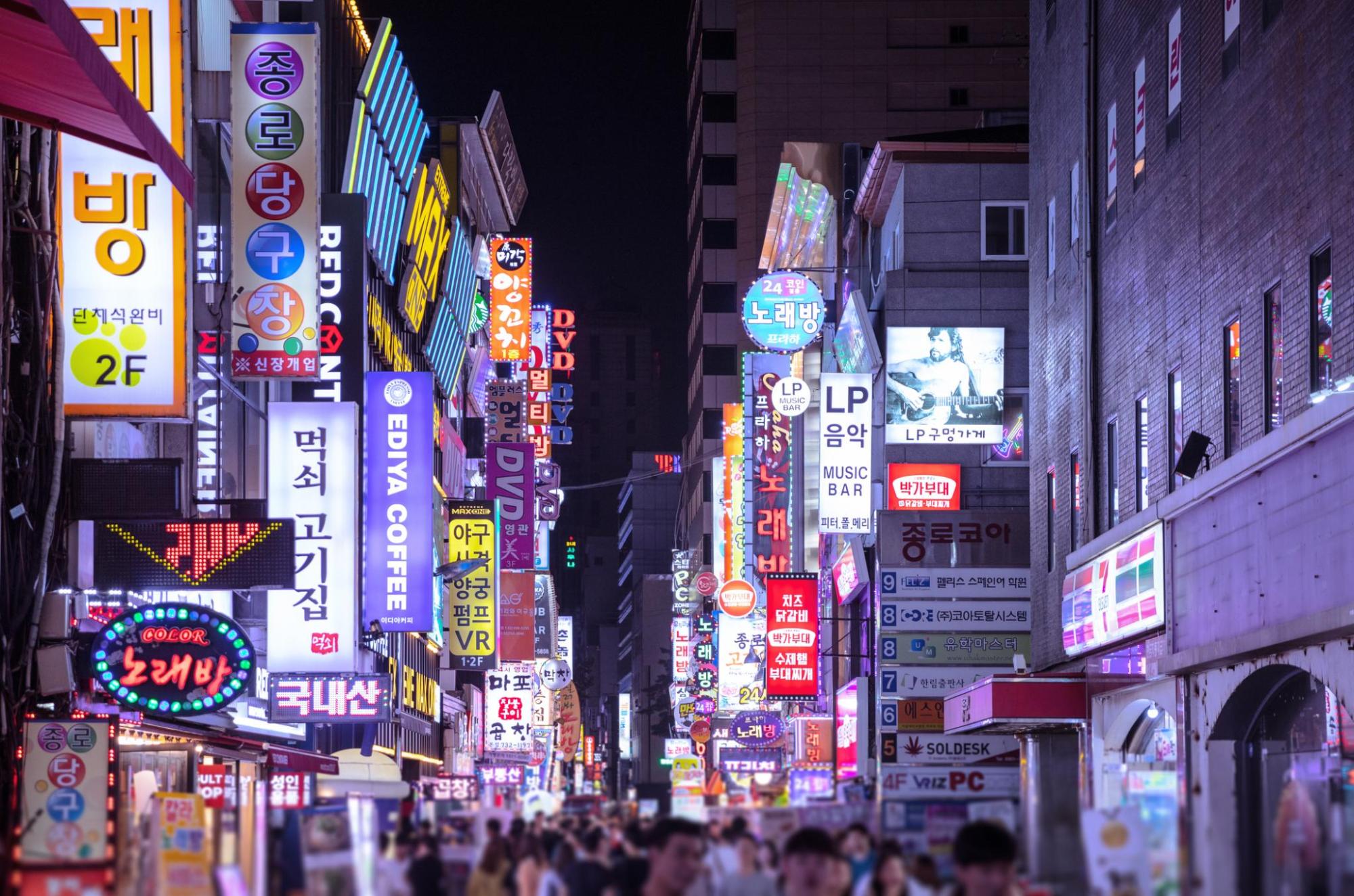
- Gangnam's modern energy
- The grandeur of Gyeongbokgung Palace
- The traditional architecture of Bukchon Hanok Village
- The locally loved Gwangjang Market for street food and shopping
This Seoul itinerary guides you through a week in South Korea's capital, where 600 years of history meets cutting-edge technology. You'll explore ancient palace gates that stand feet from gleaming skyscrapers, wander traditional hanok villages before diving into contemporary design districts, and sample street food at centuries-old markets alongside modern Korean fusion restaurants. Seven days gives you enough time to experience Seoul's many sides without feeling rushed, with each day focusing on different neighborhoods and themes that capture what makes this city so compelling.
Day 1: Arrival and settling in
Most travelers arrive in Seoul either early in the morning or later in the day. So, day 1 is the time to take it slow: you'll likely be tired from traveling and may need time to settle in.
Morning
Your morning depends on your arrival time. If you land early, travel to your accommodation to drop off bags. Many hotels offer luggage storage if your room isn't ready. Find a local café or bakery near your hotel for breakfast. Seoul's neighborhoods are filled with excellent coffee shops and bakeries serving fresh pastries alongside traditional options like kimchi jjigae (kimchi stew).
Afternoon
Once you've freshened up, explore your immediate neighborhood on foot. This gentle introduction helps you adjust to the time zone while getting familiar with the area. Myeongdong makes an excellent base for first-timers, with its mix of stores, restaurants, and easy metro access. Pick up a local SIM card if needed, exchange some currency, and maybe grab some tteokbokki (spicy rice cakes) from a street vendor.
Evening
Keep your first evening relaxed. Find a casual restaurant for dinner – Korean BBQ is always a winner if you’re in search of a local-loved meal for your first night in the city. After dinner, take a short walk around your neighborhood to see Seoul's streets lit up at night. While the city comes alive after dark, it could be worth heading back early to catch up on sleep. After all, the rest of this seven-day itinerary is packed with various experiences.
Day 2: Royal palaces and traditional neighborhoods
Now you're rested and ready to explore Seoul's historical heart. Today focuses on royal palaces and traditional neighborhoods.
Morning
Start at Gyeongbokgung Palace, Seoul's largest and most impressive royal palace, open every day except Tuesday. Arrive when it opens to beat the crowds and catch the changing of the guard ceremony. The palace grounds are extensive, so allow at least two hours to explore the throne halls, living quarters, and gardens. The National Folk Museum, located within the palace grounds, provides helpful context for understanding traditional Korean culture.
Afternoon
Walk to nearby Bukchon Hanok Village, where hundreds of traditional Korean houses still stand. The narrow alleyways and distinctive rooflines create an atmospheric setting where you can find many hanok-turned-house-galleries, tea houses, and craft workshops. Stop for lunch at a traditional restaurant serving bibimbap (a rice dish) or kalguksu (a hand-cut noodle soup). After lunch, explore any of the village's eight main viewpoints, including Wonseo-dong Handicraft Road and Gahoe-dong (Bukchon Observatory), with each offering different perspectives on this historic neighborhood.
Evening
As the sun sets, make your way to Insadong, Seoul's cultural district. Browse antique stores, art galleries, and traditional tea houses along the main street. The area comes alive in the evening with street performers and artists. Have dinner at one of Insadong's restaurants, with options ranging from royal court cuisine to modern Korean fusion. If time allows, catch a traditional performance at one of the cultural centers.

Day 3: modern Gangnam and contemporary design
Day three takes you to Seoul's modern side, exploring the upscale Gangnam district and contemporary design.
Morning
Head to Gangnam and start at COEX Mall – Asia's largest underground shopping complex. Beyond the retail haven, COEX houses the stunning Starfield Library, where floor-to-ceiling bookshelves create an impressive backdrop. Browse the stores or visit the COEX Aquarium if you're traveling with family. The mall connects to multiple metro lines, making it easy to reach.
Afternoon
Walk to Bongeunsa Temple, a peaceful Buddhist temple that sits in striking contrast to the surrounding skyscrapers. The temple offers a glimpse of traditional religious practice in the heart of modern Seoul. Afterward, explore Gangnam's streets, popping into trendy cafés and boutiques. Have lunch at one of the district's excellent Korean restaurants – Gangnam Myeonok serves traditional dishes in an elegant setting, while Seogwan Myeonok in nearby Seocho District is renowned for its cold noodle soup. Gangnam features some of Seoul's finest dining, so you're in good hands wherever you choose.
Evening
Make your way to the Dongdaemun Design Plaza (DDP), a futuristic building designed by Zaha Hadid. The plaza hosts exhibitions, fashion shows, and design markets throughout the year. As night falls, the building's LED lights create a spectacular display. Have dinner at one of the nearby restaurants, then consider returning to Gangnam for drinks at Zest Seoul, a stylish cocktail bar that perfectly captures the district's sophisticated atmosphere. The surrounding Dongdaemun area is famous for late-night shopping – clothing markets here stay open until dawn. When it comes to food, the nearby night markets offer an eclectic experience.

Day 4: Han River and international Itaewon
Today's section of your Seoul travel itinerary takes you along the Han River and into some of the city's most interesting neighborhoods.
Morning
Start at the Han River Parks, where locals come to relax, work out, and socialize. Rent a bike and ride along the riverside paths, or just walk and enjoy the views. Yeouido Hangang Park is one of the most popular sections, offering good facilities and easy access. The riverside provides a refreshing change of pace from Seoul's dense urban neighborhoods. On weekends, you'll see families picnicking, couples on bike rides, and friends playing sports.
Afternoon
Cross over to Itaewon, Seoul's most international neighborhood. This diverse district serves cuisine from around the world alongside excellent Korean restaurants. Browse the boutiques along the main street, where you'll find everything from vintage clothing to handmade crafts. The neighborhood has a distinctly different vibe from other Seoul districts, with its mix of locals and tourists. Have lunch at one of Itaewon's many restaurants – the area excels at food from around the world. Dive into Mexican tacos (Vatos Itaewon is a personal favorite), Middle Eastern kebabs, U.S.-style burgers, Italian pasta, and Indian curries, making it the go-to spot when you're craving a break from Korean flavors.
Evening
Walk or take the cable car up to Namsan Seoul Tower for sunset views over the city. The hike through Namsan Park takes about 30 minutes and offers a pleasant escape from the urban environment below. At the top, the observation deck provides 360-degree views of Seoul sprawled out beneath you. The area around the tower's base has numerous restaurants and cafés where you can grab dinner while enjoying twilight views over the city.
Day 5: Art, culture, and market life
Day five focuses on art, culture, and Seoul's market scene.
Morning
Visit the National Museum of Korea, the country's flagship museum, housing an extensive collection of Korean art and artefacts spanning thousands of years. The galleries take you through Korean history from ancient times to the modern era. Allow at least two hours to see the highlights, including celadon pottery, Buddhist sculptures, and traditional paintings. The museum grounds include beautiful gardens and a pond area that's great for a morning stroll.
Afternoon
Head to Gwangjang Market, one of Seoul's oldest and most authentic traditional markets. This is where locals stores for groceries, textiles and household items. The market's food alley serves some of Seoul's best street food – try bindaetteok (mung bean pancakes), mayak gimbap (delicious mini seaweed rice rolls), or sundae (Korean blood sausage). The bustling atmosphere gives you a genuine taste of local life. Grab lunch here and spend time wandering the various sections of the market.
Evening
Spend your evening in Hongdae, the neighborhood surrounding Hongik University. This area pulses with youth culture, indie music, and creative energy. The streets are packed with live music venues, quirky cafés, art galleries, and boutique stores. Street performers often set up on the main pedestrian street, creating an energetic atmosphere. Have dinner at one of the area's many restaurants – Hongdae offers everything from traditional Korean to experimental fusion cuisine.

Day 6: Palace gardens and hanok cafés
Today explores more of Seoul's palace architecture and traditional culture with a modern twist.
Morning
Visit Changdeokgung Palace, a UNESCO World Heritage site often considered the most beautiful of Seoul's five grand palaces. The palace's Secret Garden (Huwon) requires a guided tour that must be booked in advance, but it's absolutely worth it. The garden's pavilions, lotus ponds, and centuries-old trees create a serene atmosphere. English tours run several times daily and last about 90 minutes. The palace architecture beautifully integrates with the natural landscape behind it.
Afternoon
Walk to nearby Ikseon-dong, a recently revitalized hanok neighborhood that's become one of Seoul's trendiest areas. Unlike Bukchon, Ikseon-dong maintains more of a local feel while hosting hip cafés, bars, and restaurants within traditional houses. The narrow alleyways and traditional architecture create an endlessly photogenic setting. Stop for lunch at one of the neighborhood's fusion restaurants that blend traditional and contemporary Korean cuisine in innovative ways.
Evening
Return to the Dongdaemun area for dinner and evening shopping. The Dongdaemun night markets offer a more authentic experience than major shopping districts, with locals hunting for bargains alongside tourists. Try some late-night Korean fried chicken and beer – this combination, known as chimaek, is a beloved Korean tradition. The markets stay open late, so you can browse for clothing, accessories, and souvenirs well into the night without feeling rushed.
Day 7: Final explorations and farewells
Your final day allows for a morning excursion outside Seoul or more time exploring neighborhoods you've fallen in love with.
Morning
Consider a half-day tour to the DMZ (Demilitarised Zone) if you're interested in Korean history and the peninsula’s division. Several companies offer morning DMZ tours that include the Third Tunnel, Dora Observatory, and other significant sites, returning to Seoul by early afternoon. Book ahead as tours fill up quickly. Alternatively, stay in the city and revisit neighborhoods or attractions you want to experience again at a more leisurely pace.
Afternoon
If you took a DMZ tour, you'll arrive back in Seoul around lunchtime. Have lunch in your favorite neighborhood from the week. If you stayed in Seoul all morning, this afternoon is your chance to check off any remaining items – that café you wanted to try, the store you passed earlier, or the viewpoint you missed. Use this time to buy last-minute souvenirs and gifts. Traditional items like pottery, hanbok accessories (traditional clothing), or Korean beauty products make great mementos.
Evening
For your final evening, return to a neighborhood that captured your heart during the week. Perhaps you’ll revisit the traditional charm of Bukchon, the vibrant energy of Hongdae, or the sophistication of Gangnam. Have a farewell dinner at a restaurant you've been saving for this moment – Seoul's dining scene consistently impresses. After dinner, take one last walk through Seoul's streets, absorbing the city's unique blend of ancient traditions and cutting-edge modernity you've experienced throughout this Seoul itinerary.
Top tips for your stay in Seoul
A few practical insights can make your week in Seoul run more smoothly. Here are some essentials worth knowing before and during your trip:
- Learning basic Korean phrases like "hello" (annyeonghaseyo) and "thank you" (gamsahamnida) enhances your experience, though you may find English speakers in more touristy areas.
- Beyond the restaurants mentioned in this itinerary, keep your eyes open for street food vendors, local markets, and neighborhood eateries. Some of Seoul's most memorable meals come from unassuming spots where locals line up for their favorite dishes.
- The rechargeable T-Money transportation card works on all Seoul metro lines, buses, and even taxis. Pick one up at any convenience store or metro station and top it up as needed. It's cheaper than buying individual tickets and saves time at ticket machines.
- Google Maps doesn't provide walking or driving directions in South Korea due to local regulations. Instead, download Naver Map or Kakao Map, which offer full navigation in English.
Three, four, and five-day Seoul itinerary highlights
Not everyone has a full week to explore the city. Whether you're planning a three, four, or five-day itinerary in Seoul, you can still capture the essence of this dynamic city by focusing on core experiences. For a shorter stay, choose from any of these highlights:
- Cover Gyeongbokgung Palace and Bukchon Hanok Village to experience traditional Seoul.
- Visit Gangnam and the Dongdaemun Design Plaza for a modern taste of the city.
- Explore Gwangjang Market's street food, stop by the Han River for a stroll, and admire Namsan Seoul Tower at sunset.
- Wander around Changdeokgung Palace and its Secret Garden and spend an evening exploring Hongdae's vibrant youth culture.
- Stroll around Itaewon and have a leisurely afternoon in Insadong.

Your Seoul adventure awaits
Seoul rewards both structured planning and spontaneous exploration. Whether you're following this full week-long plan or adapting it for a shorter stay, you'll find plenty to captivate you. Seoul's compelling mix of ancient palaces, contemporary architecture, traditional markets, and modern culture ensures an unforgettable trip. The city moves at its own dynamic pace, and a week gives you just enough time to find your rhythm within it.
Disclaimer: The views and opinions expressed are those of the author and don't necessarily reflect the official policy or position of our company.