
- Seeing the sights in Kyoto with public transportation will require a mix of subway, train and bus
- To avoid the crowds at the most popular sights, consider arriving soon after sunrise
- Many businesses in Kyoto will only accept cash, while tipping isn't expected in any situations
One of the most enchanting cities in Japan, Kyoto overflows with heritage and offers endless things to do. While there are modern areas in the city, when you're visiting Kyoto, you'll discover many parts are still very traditional. Walking the streets will sometimes feel like stepping back in time.
You'll get the most from your trip if you know how to get around Kyoto, where to stay in Kyoto, and the top things to do in Kyoto. We’ll walk you through all of that and take you on a journey through the cultural richness in the city, while exploring more about Japanese customs and the best ways to respect the local community.
When to visit Kyoto
There are four distinct seasons in Kyoto, each of them giving the city a different atmosphere.
Spring: Peak season
The months of March to May are the most popular time for tourism in Kyoto because the spring weather is the best of the year, with low rainfall and pleasant temperatures.
This is also when the cherry blossoms bloom, filling the city with pink flowers. However, because Kyoto is one of the most iconic areas to see the cherry blossoms, visitor numbers soar and it gets more expensive and very crowded.
Summer: Off-peak season
In the summer months of June to August, the crowd numbers drop as the temperature rises. This can be a better time to visit if you don't want the main attractions to be too busy, but the weather can get very humid and unpleasant.
Fall: Peak season
Fall is one of the best times to visit Kyoto because it has a good balance of conditions. The weather is quite pleasant, the number of visitors is a bit lower than spring, and the autumn leaves give the city a beautiful color.
It's still quite warm in September, so visiting later in November when most of the leaves have changed will give you the complete autumn experience.
Winter: Off-peak season
There's something magical about Kyoto in winter, especially if snow falls around the temples and bamboo forests. The city is much quieter with fewer travelers, but it gets very cold and the shorter daylight hours limits the amount of sightseeing you can do.
How long to stay in Kyoto
With so many things to do in Kyoto, you'll only scratch the surface if you stay for just a day or two. To be able to cover more of the highlights, three or four days is a good length of time to stay in Kyoto to see some of the temples, natural sights, and food hotspots.
How to get around Kyoto
Although Kyoto is a relatively large city with its main attractions spread apart, it's easy to get around. There's a comprehensive public transportation system and other convenient options like taxis or even cycling.
Prepaid transportation cards
Because Kyoto’s public transportation system is run by multiple private companies, you need to pay separately for each ticket if you’re paying with cash. So, the easiest option is to use a prepaid transportation card that you can top up as needed. You’ll then be able to just tap on and off for all of Kyoto’s trains, buses, and subway.
There are a few options for prepaid cards—also known as IC cards—and they all work in very similar ways. The most common in Kyoto is called an ICOCA and can be bought at train stations. There is also a digital version that will work on some phones.
The most popular IC card in Japan is called a Suica. It can only be bought in Tokyo but will work in Kyoto. It also has a digital version for phones. In total, there are about ten major IC cards you can buy in Japan. If you already have one, it’s fine to keep using it in Kyoto.
Subway
Kyoto has two subway lines, traveling north-south and east-west and connecting in the city center at Karasuma Oike station. With regular departures and clean air-conditioned carriages, it's one of the most comfortable and convenient ways to get around the city.
But although there are a total of 31 stations in the network, the Kyoto subway doesn't cover all of the city, so you'll only be able to use it to reach some of the main attractions. Travelers can buy a one-day pass that includes the local buses.
Trains
To reach other parts of the city not covered by the subway, Kyoto's train network is a good choice. However, it can be slightly challenging with 13 different lines run by several separate rail companies. This is where an IC card like an ICOCA makes it easier to manage.
Buses
Many of Kyoto's sights, like its historic temples, are on hillsides or other areas where train stations can't be built. To reach these spots by public transportation, you can use buses.
Kyoto has a large bus network that's serviced by several different companies. They generally come regularly but can get very crowded, particularly on routes to the most popular attractions.
For most public buses in Japan, including in Kyoto, you get on at the back door and off at the front door. To pay cash, take a ticket from the machine at the back door and use this to determine the amount to pay the driver when you leave. With an IC card, tap on and off at the start and end of the trip.
Taxis
Another good option for how to get around Kyoto are taxis. Because the city's buses can get so crowded near attractions, many people use taxis just for the last part of their journey from a nearby train or subway station.
There are a lot of taxis in central Kyoto, and you can hail them on the street or find a taxi rank. Most standard taxis can fit four passengers, and they can even be more economical than public transportation for groups traveling short distances.
Bicycle
Mostly flat and with a handful of dedicated cycling trails, Kyoto is quite easy to get around by bicycle. Especially for visitors who are exploring the central areas, it may be faster and less stressful than catching crowded public transportation all day.
Many hotels and guesthouses will provide bikes to their guests. There are also rental stores across the city, including at the main train stations. A popular cycling route along the Kamo River is a particularly good way to travel north-south across Kyoto.
Where to stay during your trip to Kyoto
There are lots of areas that are good to stay in Kyoto, with a mix of modern hotels and traditional heritage. Because Kyoto's main sights are spread across the city, you'll need to travel throughout your trip regardless of where you choose.
- Downtown Kyoto: A convenient option for first-time visitors, it feels like a modern Japanese city with lots of restaurants and good transportation links.
- Gion: Famed as the city's geisha district, this will feel like a true Kyoto experience, although accommodation prices are generally more expensive.
- Nakagyo: Just north of downtown and with a more residential atmosphere, it offers more mid-range accommodation while still being close to many sights.
- Kyoto Station South: A convenient area for transportation if you’re doing some day trips, with a good mix of hotels and restaurants.
Essential things to know about Kyoto
How to beat the crowds
Kyoto is one of the most popular cities in Japan, and traveler numbers have risen over the years. During peak seasons, some of the main sights in the city like Kiyomizu-dera temple can get extremely crowded.
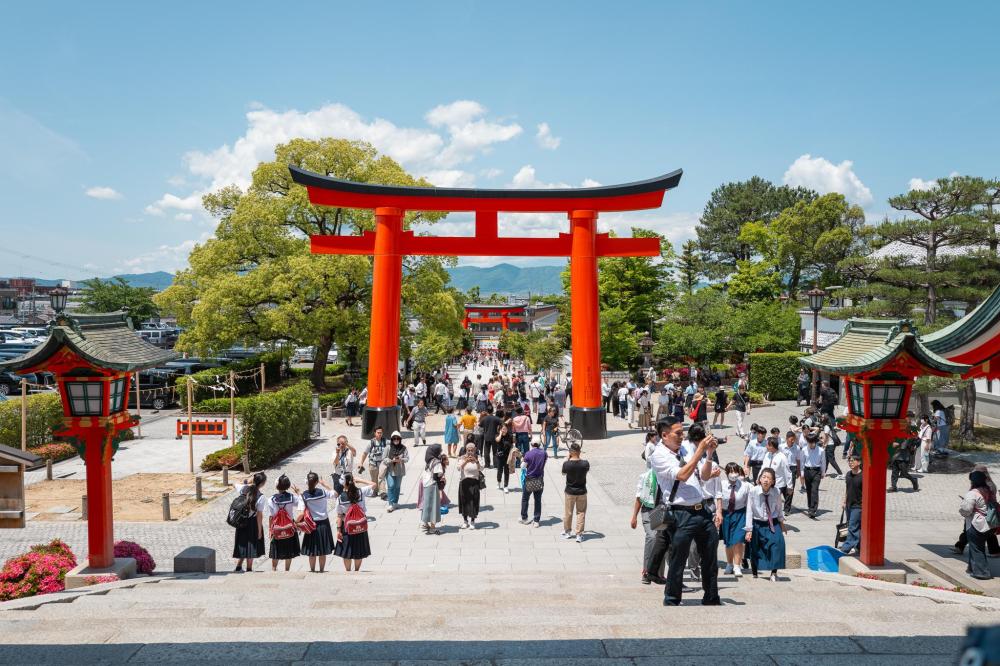
One way to avoid the crowds is to visit before the large tour buses arrive. For some sights, like the Fushimi Inari Shrine or Arashiyama Bamboo Grove, this means arriving around sunrise (or at least before 8:00 am).
You can also often get away from other visitors by not following the main paths. Many of the sights have multiple routes you can use to explore them, but the tour groups will always follow the same one.
Show respect in Gion
One of the busiest districts in Kyoto for travelers is Gion, the city's traditional geisha district. Although the streets are lined with heritage buildings, it's still a working neighborhood and you'll see entertainers walking between appointments.
It's considered very rude to block the paths of these entertainers or to disturb them while you take photos. Although photography is allowed, it should be done respectfully.
Because of the crowds, local authorities have closed many of the residential streets and introduced fines for photography on private roads in Gion, so it's important to follow any instructions.
Behavior at religious sites
There are two main types of religious sites you'll visit in Kyoto – Buddhist temples and Shinto shrines. At both of them, respectful behavior will be expected. This includes no eating or drinking and keeping your voice low.
Photography is allowed in most parts of temples and shrines, but there will be signs to let you know where you can't take photos, such as inside the main altar building.
In Japan, neither the shrines nor the temples have strict rules about clothing. However, it's considered polite to dress modestly and not have your shoulders or upper legs uncovered. Long shorts are normally fine.
To enter some shrine and temple buildings, you may need to take off your shoes. If so, leave them in the shelves provided and wear any slippers you're offered.
Shoe etiquette
Japan has strict rules about where you can't wear shoes, and you'll likely find yourself taking them off quite often. (It's why wearing shoes that are easy to slip off and on is very common for locals).
Along with shrines and temples, some of the other places you may need to take off your shoes are people's homes, heritage buildings, ryokan-style accommodation, and traditional restaurants.
At the point where you need to take off your shoes, there will normally be shelves or something similar to leave them. If there are slippers, you're expected to wear them until you put your shoes back on. It's bad manners to be barefoot, so keep your socks on.
If you're walking over tatami mats, you're never allowed to wear shoes or slippers. This is to protect the mats.
Some bathrooms in Japan will have a pair of slippers at the door. In this situation, you're expected to swap them for your current footwear while you are in the toilet and then swap back when you leave.
Communicate with care
Japanese people communicate with each other in subtle ways, and understanding some of this will help you with any interactions. For example, it's rare for someone to answer a request with a direct "no." Instead, look for clues that they're politely trying to decline.
Conversations in Japan are usually always quite calm. Even if you're frustrated with a situation, try not to raise your voice or show any signs of anger. Pointing with a single finger is also considered rude, so gesture with an open palm instead.
Even when you're just talking to your own travel companions, try to keep your voices down to not disturb other people. Talking loudly on public transportation is considered particularly rude.
Tipping
Japan doesn't have a tipping culture, and you won't be expected to give anyone a tip in any situation.
In fact, it can even be considered quite rude to give an employee a tip in many situations. Even if you think you're being nice by leaving a small amount of change, the best approach is to not leave any money behind.
Using cash
Despite its modern reputation, Japan has taken a long time to start adopting more recent forms of payment. Although using credit cards has become more common in recent years, much of the economy still relies on cash.
Make sure you always have cash with you, and don't rely on using a credit card or some other form of digital payment. You will likely end up with a lot of loose change, so carrying some kind of purse is a good idea. You'll be able to use those coins at the many vending machines around Kyoto.
Safety
Kyoto is an extremely safe city. If you do have any minor issues, you can go to the police boxes (called "koban") that you'll find on some street corners in the central parts of Kyoto.
Japan is at risk of earthquakes, so it's worthwhile familiarizing yourself with the evacuation procedures of your accommodation. You can download the official Safety Tips app for travelers that will send emergency warnings in multiple languages.
Carry your trash
When you're visiting Kyoto, you may notice that there are very few trash cans on the street. In Japan, it's polite to carry your trash away with you, so be prepared to put anything in your pocket or backpack.
There will sometimes be bins next to vending machines or outside convenience stores, so if you do want to get rid of your trash, look there for an option (although technically they're only supposed to be used for items you bought at those locations).
Top things to do when visiting Kyoto
With so many things to do in the city, it’s easy to fill a seven-day itinerary in Kyoto. If you're only visiting for a few days, you may like to prioritize these experiences
- Kiyomizu-dera temple: One of the most popular temples in Kyoto, it has stunning views across the city from its wooden stage, especially around sunset.
- Gion: The heritage architecture of the city's geisha district captures the history of Kyoto, while you'll also find excellent dining options here.
- Tea ceremony: Take part in a traditional experience that's been performed in Kyoto for centuries.
Kyoto travel tips: Hidden gems
Along with the better-known things to do in Kyoto, there are some more local or hidden experiences you may want to consider that will show you a different side of the city.
- Kibune to Kurama hike: A relatively easy walk in the mountains above the city takes you through gorgeous scenery and an 8th-century temple.
- Kyoto International Manga Museum: Fans of Japanese comics will find thousands of books to look through, while the exhibitions will be of interest to any visitor.
- Izakaya tour: Join a local guide to discover the small bars of Kyoto and the unique Japanese customs that accompany them.
The cultural capital of Japan
The cultural landscape of Kyoto is filled with heritage, from the temples and shrines to the tea ceremonies and geisha districts. Travelers aren't expected to understand all of the local customs, but if you offer some respect, you'll be rewarded with fascinating insights into some of Japan's most important traditions.