
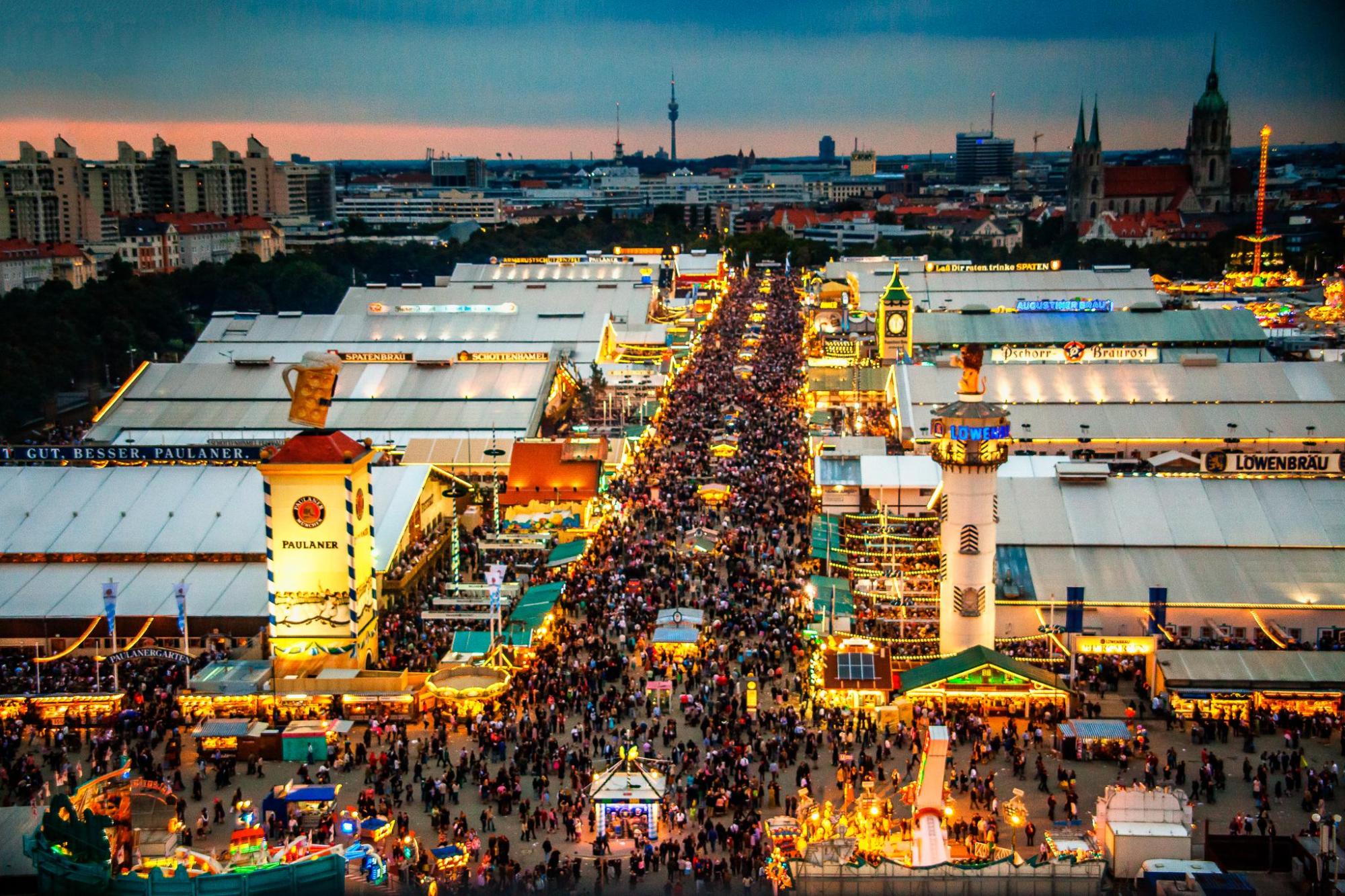
Frankfurt’s Oktoberfest celebrations often take place in large event spaces, combining traditional Bavarian elements with a modern city setting.
Oktoberfest in Germany is a cultural celebration steeped in heritage, featuring beer tents, traditional German cuisine, music, and a cheerful atmosphere. While it’s most closely associated with Munich, festivities take place across the country, from major cities like Berlin to smaller towns like Nuremberg. You’ll find everything from large-scale events to more local gatherings, with each destination bringing its own character and interpretation of Oktoberfest, shaped by regional and local influences.
Whether you’re looking for a classic Bavarian setting, a lively city atmosphere or a more relaxed alternative, there are plenty of ways to experience this iconic event. Here’s where to go and what to expect across some of the best places to celebrate Oktoberfest in Germany beyond Munich.
Best places to celebrate Oktoberfest beyond Munich
While Munich remains the most well-known destination, many other cities host their own Oktoberfest celebrations. These range from large, traditional festivals to smaller interpretations, each offering a distinct atmosphere. Wherever you choose to celebrate, expect traditional German cuisine, festive beer tents and plenty of “Prost” moments.
Stuttgart
Stuttgart’s three-week beer festival is one of the largest Oktoberfest-style celebrations in Germany and is often considered Munich’s main rival. Held in the Bad Cannstatt district from late September to early October, it takes place on one of Europe’s largest fairgrounds. With large beer tents, traditional food, carnival rides, and a parade, it delivers a similar atmosphere with a slightly more relaxed feel. It’s a good choice if you want the scale of Munich but with fewer crowds and a more family-friendly experience.
How to get there
The festival takes place at Cannstatter Wasen and is easily accessible via the U-Bahn (Bad Cannstatt station), with good connections to the city’s downtown area.
Is entry free?
Entry is free, although food, beverages, and rides are paid and seating in the main tents may require a reservation.
Where to stay nearby
Staying in Bad Cannstatt offers the closest access to the festival, while central Stuttgart provides a wider range of hotels, apartments, and vacation rentals with easy transit connections. Booking early is recommended during the festival period.
Berlin
Oktoberfest celebrations in Berlin are more modern and spread across multiple venues, combining traditional beer tents with a lively city atmosphere. Typically running from late September to early October, events take place across central districts, including Alexanderplatz. With live music, themed nights, and a mix of indoor and outdoor spaces, Berlin offers a more flexible, nightlife-focused way to celebrate. Its multi-venue format makes it easy to explore different events across the city.
How to get there
Events take place across locations including Zentraler Festplatz and areas near Alexanderplatz, all accessible via the U-Bahn and S-Bahn.
Is entry free?
Many events are free to enter, although food, beverages, and some seating require payment or reservations.
Where to stay nearby
Staying in central districts like Mitte offers convenient access to key events, while Charlottenburg provides a quieter base with good transportation links. A wide range of accommodation is available, from central hotels and apartments to short-term rentals across the city.
Cologne
Cologne’s Oktoberfest celebrations combine Bavarian traditions with the city’s lively Rhineland spirit, creating a high-energy and social atmosphere. Typically held over weekends from late September to early October, events take place near venues like the Südstadion and along the Rhine. Expect lively beer tents, music, and a more party-focused experience, making it a strong option if you’re looking for a vibrant setting. The city’s strong carnival culture adds to the atmosphere, giving Oktoberfest a distinctly social and celebratory feel.
How to get there
Events are easily accessible via Cologne’s U-Bahn, S-Bahn, and tram networks.
Is entry free?
Many events require tickets or reservations, particularly for entry to the main tents.
Where to stay nearby
Staying in Altstadt-Nord or near Hauptbahnhof offers easy access, while the Belgisches Viertel provides a more local feel. Accommodation ranges from hotels and apartments to vacation rentals.

Hamburg
Hamburg offers a mix of traditional and contemporary Oktoberfest celebrations, often set against its waterfront backdrop. Typically held from late September to early October, the main event takes place at Wandsbeker Marktplatz, alongside smaller events across the city. With beer tents, Bavarian food and live music, the atmosphere is lively yet slightly more relaxed than in Munich, offering a good balance between festival energy and city exploration. The waterfront setting adds a unique backdrop compared to more traditional inland festivals.
How to get there
Events are accessible via Hamburg’s U-Bahn and S-Bahn networks, with public transportation recommended.
Is entry free?
Many public events are free, although food, beverages and some experiences are paid.
Where to stay nearby
Stay in central areas like Altstadt or near Hauptbahnhof or in neighborhoods like St. Pauli and Schanzenviertel for nightlife. Options include hotels, apartments, and vacation rentals in Hamburg.
Frankfurt
Frankfurt’s Oktoberfest celebrations often take place in large event spaces, combining traditional Bavarian elements with a modern city setting. Typically running from mid-September through early October, the main event is held at Deutsche Bank Park. With organized beer tents and live music, it’s a good option if you’re looking for a more structured and social experience. Traditional attire like dirndls and lederhosen is often encouraged, enhancing the overall experience.
How to get there
Deutsche Bank Park is easily accessible via the S-Bahn from the downtown area and Hauptbahnhof.
Is entry free?
Most events require tickets or reservations, often including food and beverage packages.
Where to stay nearby
Staying near Hauptbahnhof offers convenient transport links, while central areas like Innenstadt and Sachsenhausen provide a lively base. Accommodation includes hotels, apartments, and vacation rentals in Frankfurt.
Dresden
Dresden’s Oktoberfest celebrations offer a more relaxed and traditional atmosphere, with a focus on regional culture and smaller-scale events. Typically held from late September through early October at Ostragehege, it’s a quieter alternative to larger festivals. The smaller scale creates a more intimate setting, making it easier to enjoy the festival at a slower pace.
How to get there
The festival area is accessible by tram and S-Bahn from the central downtown area.
Is entry free?
Many events require tickets or reservations, particularly for evening sessions.
Where to stay nearby
Stay in Altstadt for central access or Innere Neustadt for a livelier atmosphere. Options include hotels, apartments, and vacation rentals.

Hanover
Hanover’s Oktoberfest has a more local, community-focused feel, centered around the Schützenplatz fairgrounds. Typically held from late September to early October, it offers a more laid-back and less commercialized alternative to larger festivals. It often feels more like a regional fair, with a stronger focus on local participation and community atmosphere.
How to get there
Schützenplatz is well connected by tram and S-Bahn from the central downtown area.
Is entry free?
Entry is generally free, though food, beverages, and seating are paid.
Where to stay nearby
Stay in Mitte for central access or Döhren-Wülfel for proximity to the grounds. Accommodation includes hotels, apartments, and vacation rentals.
Bavaria beyond Munich
Beyond Munich, smaller towns and cities across Bavaria, including Nuremberg, Augsburg and Regensburg, host their own Oktoberfest-style celebrations. These events tend to offer a more traditional, local experience, with smaller beer tents, regional food and a slower pace compared to larger city festivals. Destinations like Nuremberg’s Altstadtfest or Bamberg’s historic beer culture offer a more intimate way to experience Bavarian traditions.
Often set in town squares or local fairgrounds, they offer a more relaxed atmosphere where it’s easier to find seating and move between tents. While they don’t match Munich in scale, they provide a less crowded and often more cost-effective way to experience Oktoberfest in Bavaria. These events often reflect long-standing regional traditions, offering a deeper insight into Bavarian culture.
How to get there
Many Bavarian towns are accessible by regional train from Munich, making them ideal for day trips or short stays. Popular routes connect cities like Nuremberg, Augsburg and Regensburg within a few hours.
Is entry free?
Entry is usually free, although seating in tents may require reservations during busy periods, particularly at larger local festivals.
Where to stay nearby
Staying locally offers a more immersive experience, with guesthouses, boutique hotels and vacation rentals providing a traditional base. Smaller towns also tend to have greater availability than Munich during peak dates.

Find your Oktoberfest experience in Germany
Oktoberfest in Germany goes far beyond its famous Munich celebration, with cities across the country bringing their own energy, traditions, and character to the festival. From traditional, large-scale events in Stuttgart to more modern celebrations in Berlin, each destination offers a different way to experience Oktoberfest.
Where you choose to celebrate ultimately depends on the kind of experience you’re looking for, whether that’s a classic Bavarian setting, a lively city backdrop, or a more local, relaxed alternative. With so many options, it’s easy to plan a trip that suits your travel style while exploring different sides of Germany along the way.